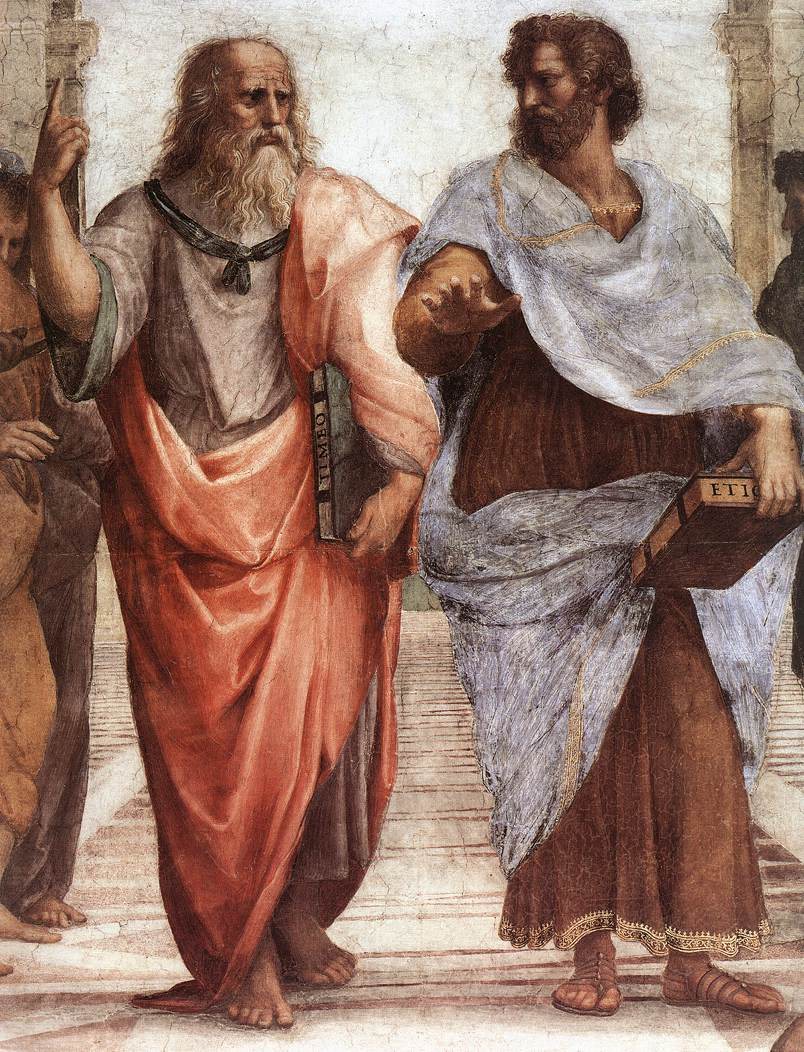
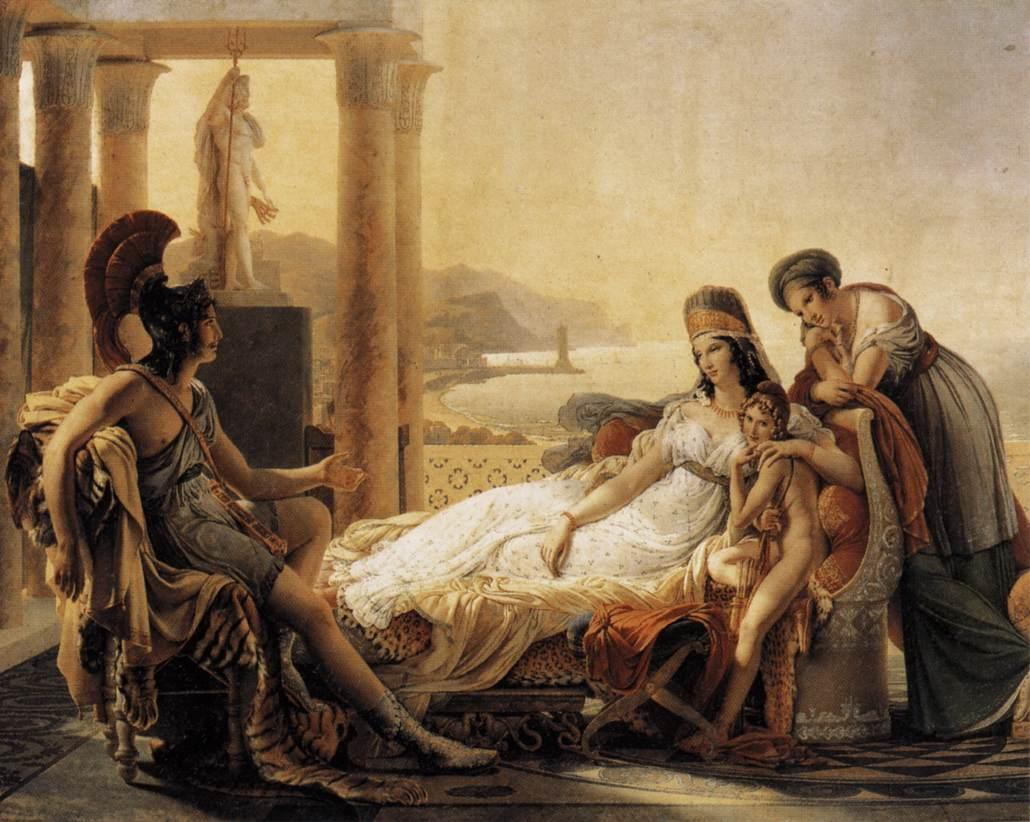
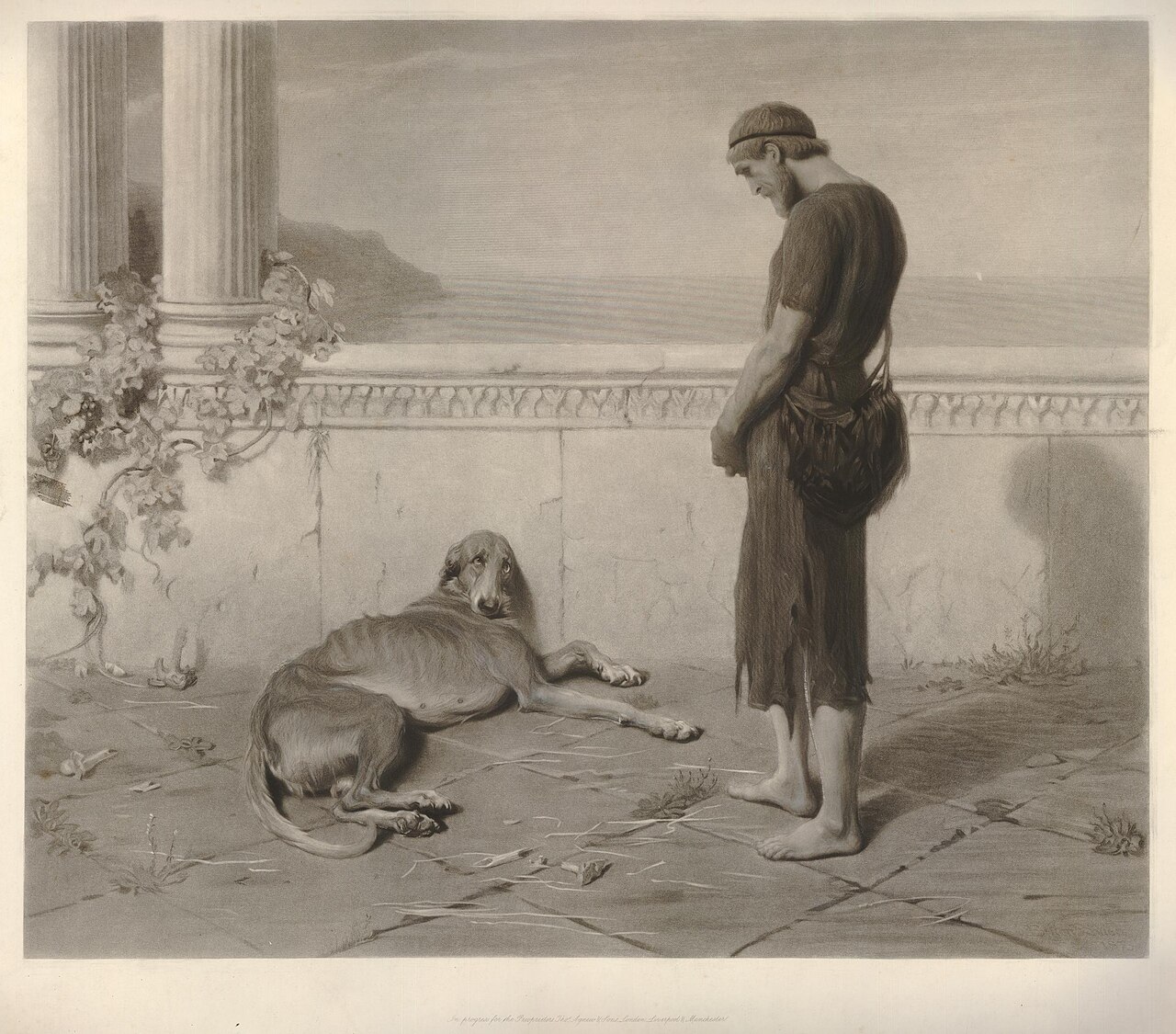
The new man of new Greece → Aristotle’s ζῷον πολιτικόν(zōon politikon)
lit. “creature of the πόλις”; Aristotle’s own word order is πολιτικὸν ζῷον, Pol. 1.1253a2–3
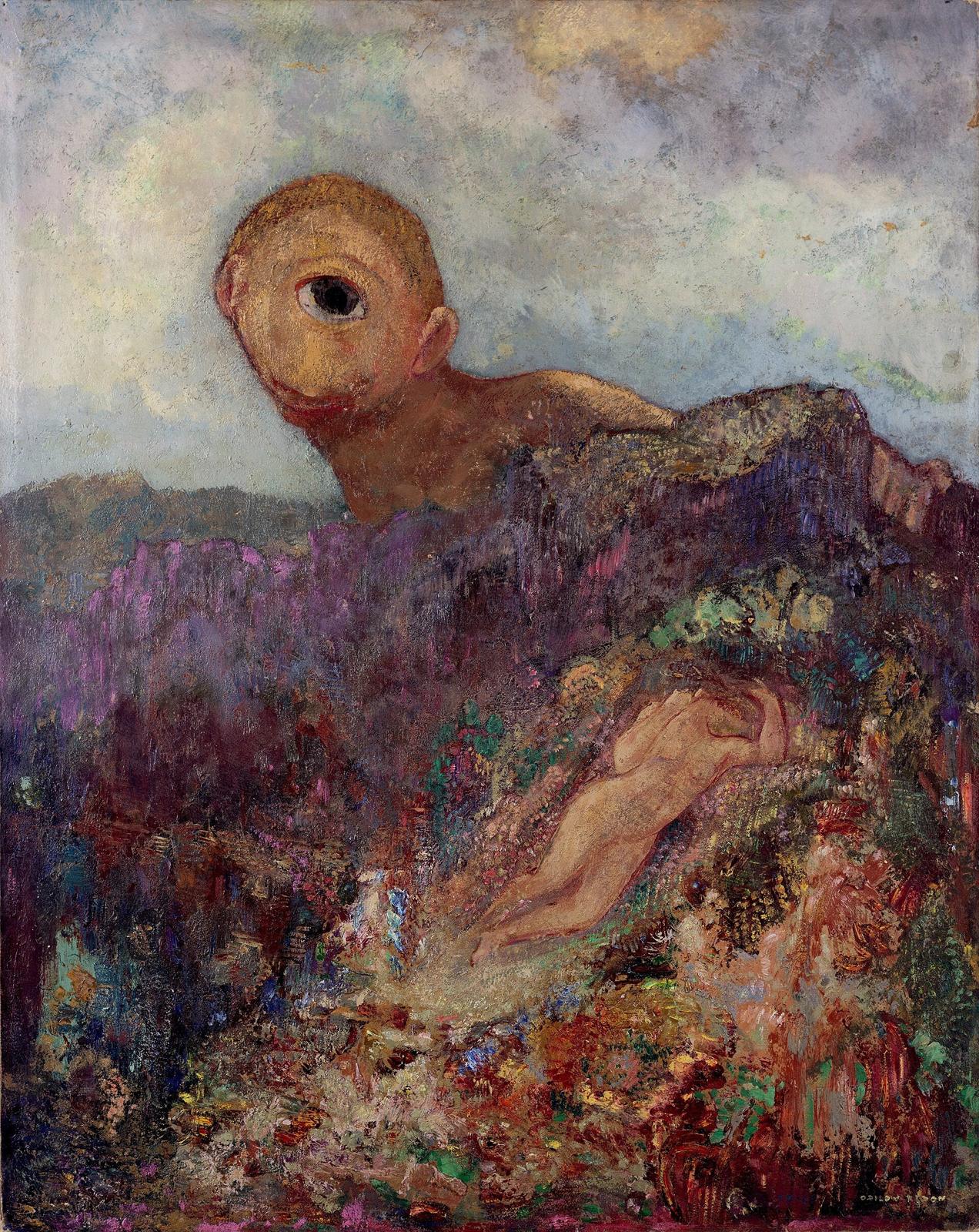
the man without a city: ἢ θηρίον ἢ θεός, “either a lower animal or a god” (1253a29) cf Cyclopes / Calypso’s offer of immortality
Aristotle’s pre-polis example is the Odyssey: Cyclopes, “each one is the law for his own wives and children” (Od. 9.114, quoted at Pol. 1252b22–23)
What does it mean for society to collapse and be rebuilt?
Cyclopes: “no institutions, no meetings for counsels” (οὔτ᾽ ἀγοραί, Od. 9.112) ↔ Ithaca: “never has there been an assembly of us … since great Odysseus went away” (Od. 2.26–27)
20 yrs without a king → the home island drifting toward the Cyclops condition; the return = a rebuild
How does a man adapt to massive societal change / revolution?cfπολύτροπος, the man of many turns
How does a man interpret the past to predict the future? When is imagery allegorical, when is it theatre?
Relevance today
grand narratives, political structures & realism, culture cycles
where the humanities is actually useful vs larp → frame-level analysis, rebirth of metaphysics, concept diffusion / compression
Bust of Aristotle, Roman copy after Lysippos, Palazzo Altemps · Wikimedia
Drawn for this slide · after the owner’s notes on concept diffusion and frame-level analysis
γ΄ Who is Homer?
Who is Homer?
Analysts vs Unitarians: 1 man or many? synchronic or diachronic?
F. A. Wolf, Prolegomena ad Homerum (1795): no writing in Homer’s day → loose songs, stitched into epics later → Analysts hunt layers, hands, interpolations
Unitarians: one poet, one design; linguistic + thematic unity as the proof
the oldest Analyst move is ancient: Aristarchus athetizes Od. 24.1–204 as “un-Homeric” cf marginalia ↓
Parry, Sorbonne theses (1928, under Meillet): L’Épithète traditionnelle dans Homère → the noun-epithet formula is a metrical building block, picked for the slot in the line, not for the moment
Meillet → Matija Murko → South Slavic guslari: test Homer against a living oral epic
1933–35 Yugoslavia fieldwork, Lord as assistant: 3,584 discs, now the Milman Parry Collection (Harvard) · Parry d. Dec 1935, aged 33
Lord, The Singer of Tales (1960): composition in performance; no fixed original
Avdo Međedović, 1935: heard a 2,160-line printed Wedding of Meho → dictated it back at 12,323 lines ≈ an Odyssey
“a relatively most fluid period, with no written texts”each place sings its own version: multiforms ripple out
Nagy’s five “ages of Homer”, “The ‘Panathenaic Bottleneck’”, CP 96 (2001) 109–111, = Homeric Questions (1996) ch. 2, 41–42; centripetal / centrifugal: HQ 43, 52 · “crystallise” is our metaphor, Nagy’s word is “text-fixation”
Trojan Horse = Poseidon as earthquake?
fact-checkhalf holds. Poseidon link real; wrong Troy level; allegory unproven
Poseidon = ἐνοσίχθων “earth-shaker” (Od. 1.74, Il. 7.445) + Ἵππιος, lord of horses → quake ↔ horse pairing ✓
off-kilter walls = Troy VIh, c. 1300 BCE: Blegen’s “severe earthquake”, “no traces of fire” ✗ not Troy VII
Troy VIIa, c. 1180: “marked by the ravages of fire” → the sack candidate
horse = quake: a modern guess (geophysicist Amos Nur, 1998); Nur & Cline’s “Poseidon’s Horses” (JAS 2000) puns on it, never argues it → speculative, not consensus
Homer: Epeius built it σὺν Ἀθήνῃ, “with Athena” (Od. 8.493) → Athena’s trick, not Poseidon’s
rationalised already in antiquity: “a contrivance to make a breach in the Trojan wall” (Pausanias 1.23.8) → siege engine
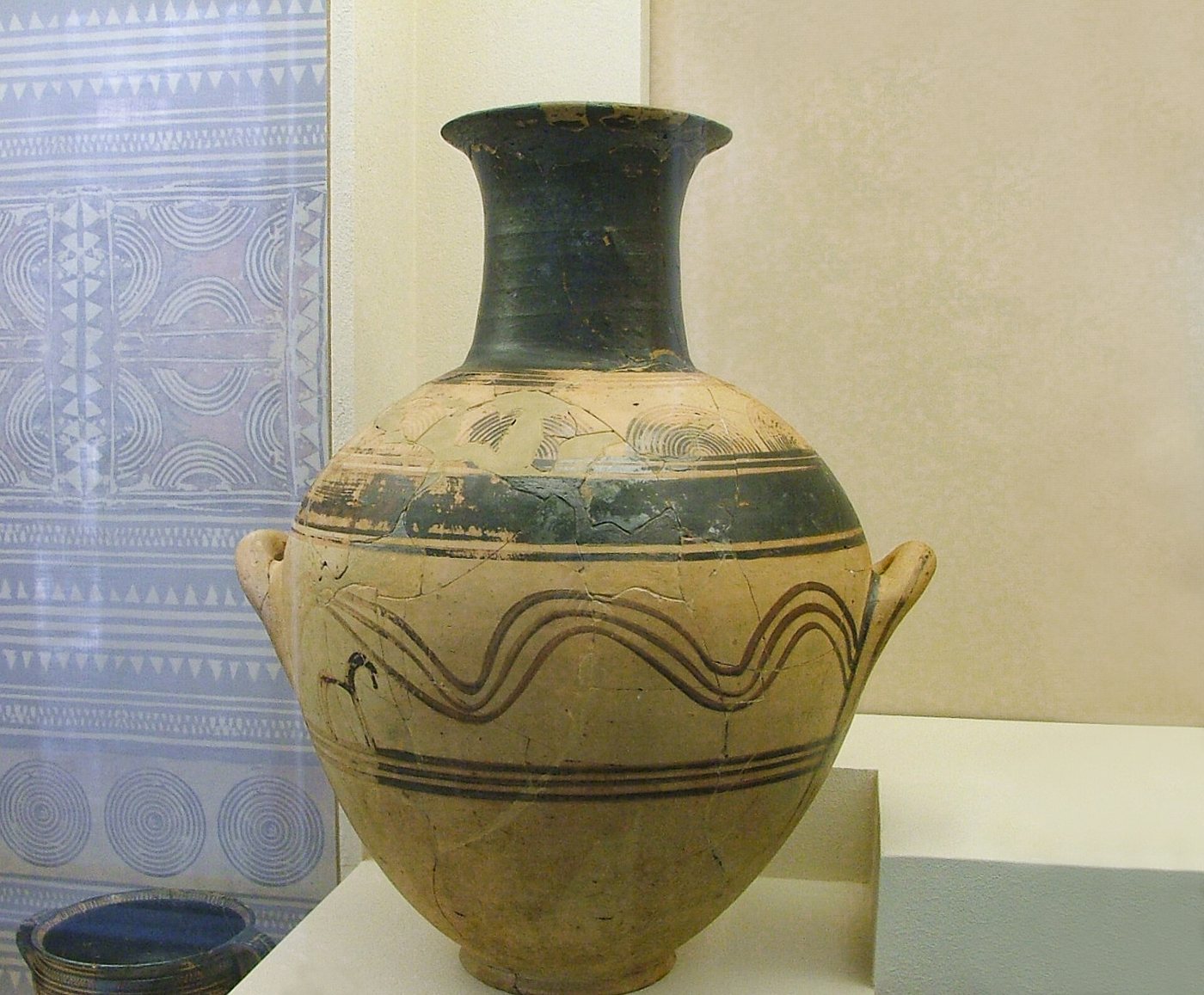
Mykonos pithos, c. 670 BCE, Archaeological Museum of Mykonos 2240 · photo Zde, CC BY-SA 4.0
fact-checkthesis holds; grain detail off. Gold yes; the grain was Crimean
Colchis = western Georgia, Black Sea coast (Phasis) ✓
gold in fleeces ✓ Soanes of the Caucasus: “the barbarians obtain it by means of perforated troughs and fleecy skins, and … this is the origin of the myth of the golden fleece” (Strabo 11.2.19; he hedges: “it is said”)
grain ✗ not Georgia → Athens’ Black Sea grain = Bosporan kingdom (Crimea / Ukraine): “about four hundred thousand” μέδιμνοι a year (Dem. 20.32); Colchis = gold, linen (Hdt. 2.105)
Peloponnesian War ✓ Lysander, Aegospotami 405 → Hellespont lifeline cut → “many were dying in the city from starvation” (Xen. Hell. 2.2.11) → surrender 404
→ fleece = gold of the Black Sea edge; the Pontus as a whole = Athens’ bread
Thorvaldsen, Jason with the Golden Fleece, 1803–28, Thorvaldsens Museum · photo Yair Haklai, CC BY-SA 4.0
ε΄ Greece before Homer
Greece before Homer
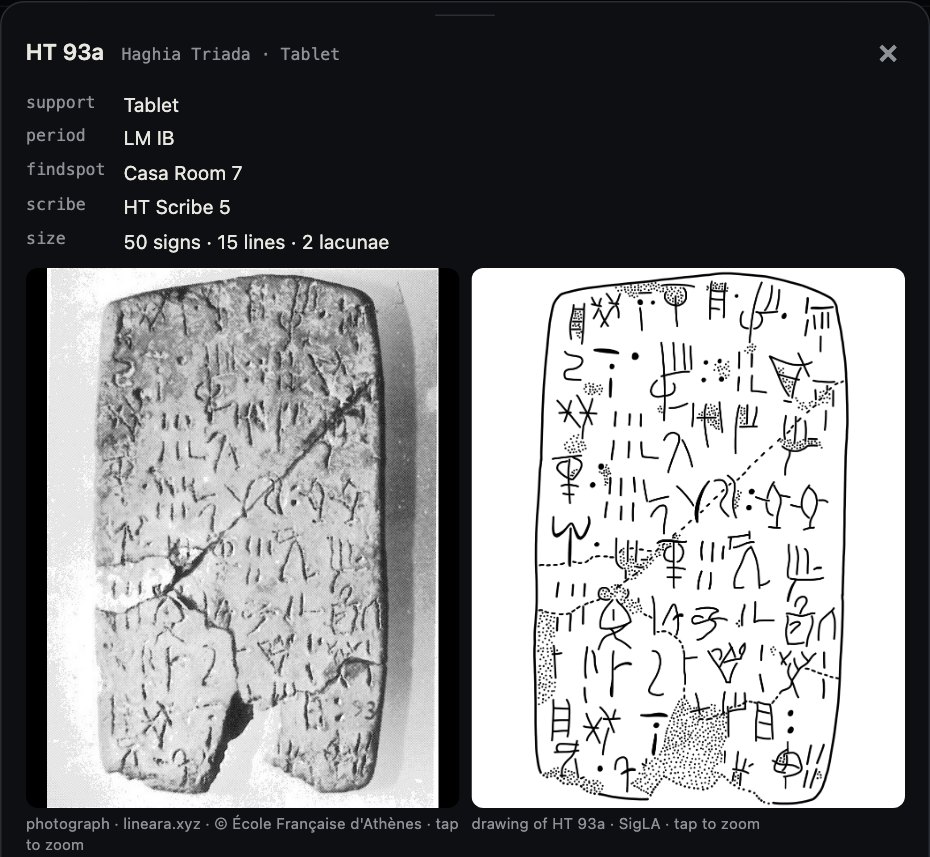
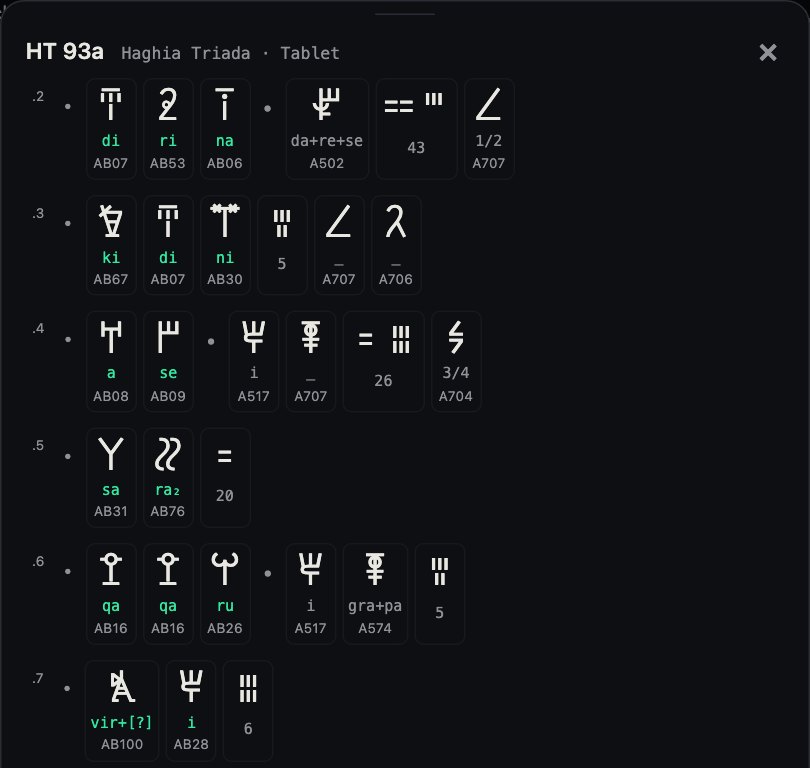
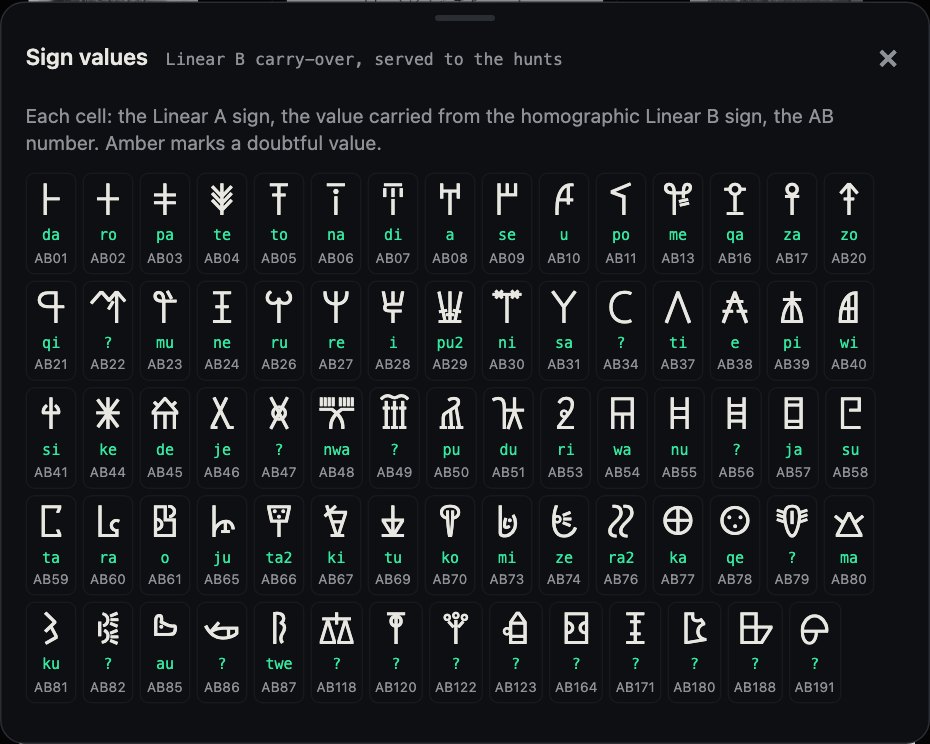
Minoans (palatial structures, first written script) Crete, c. 2000–1450 BCE
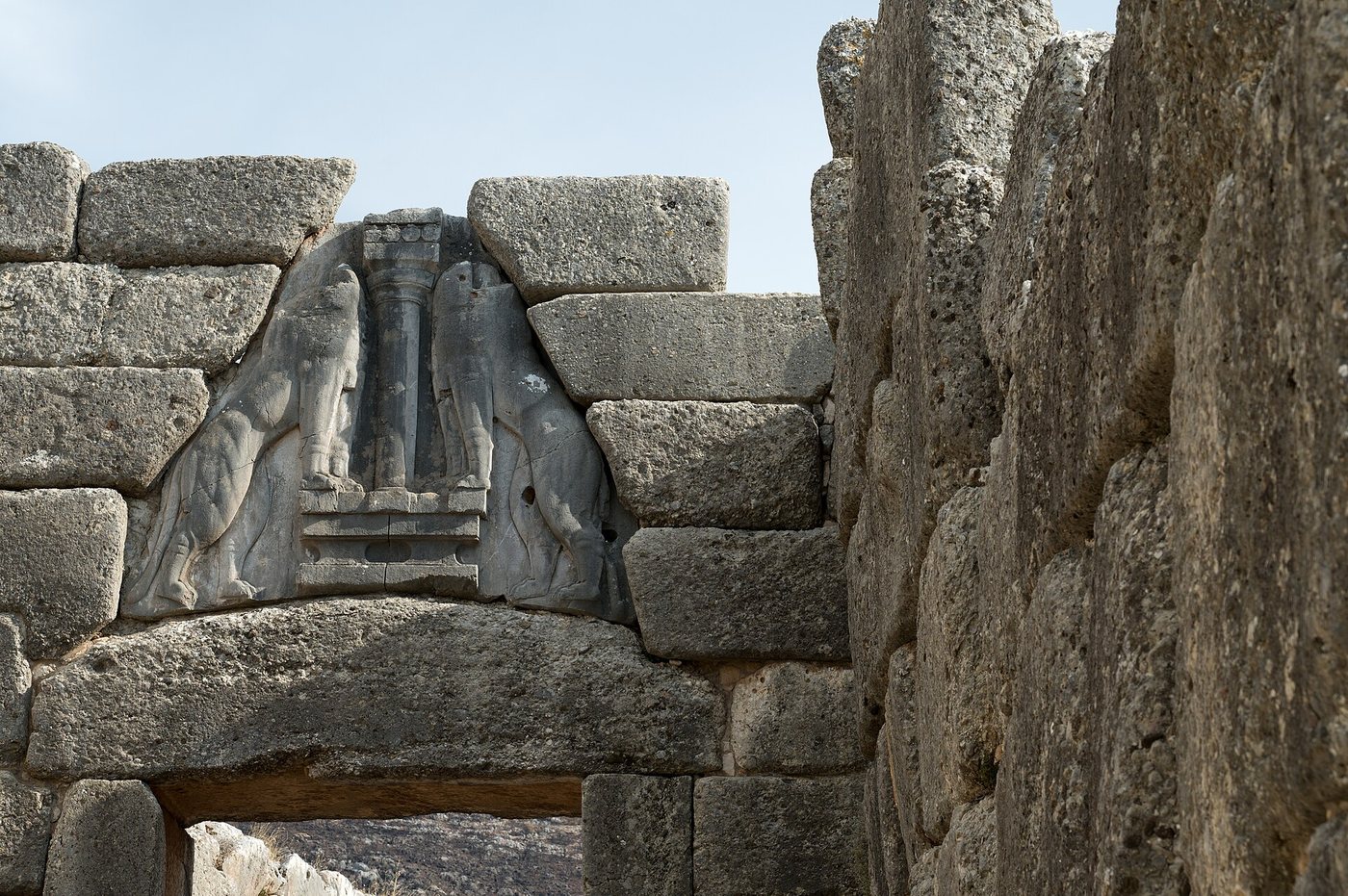
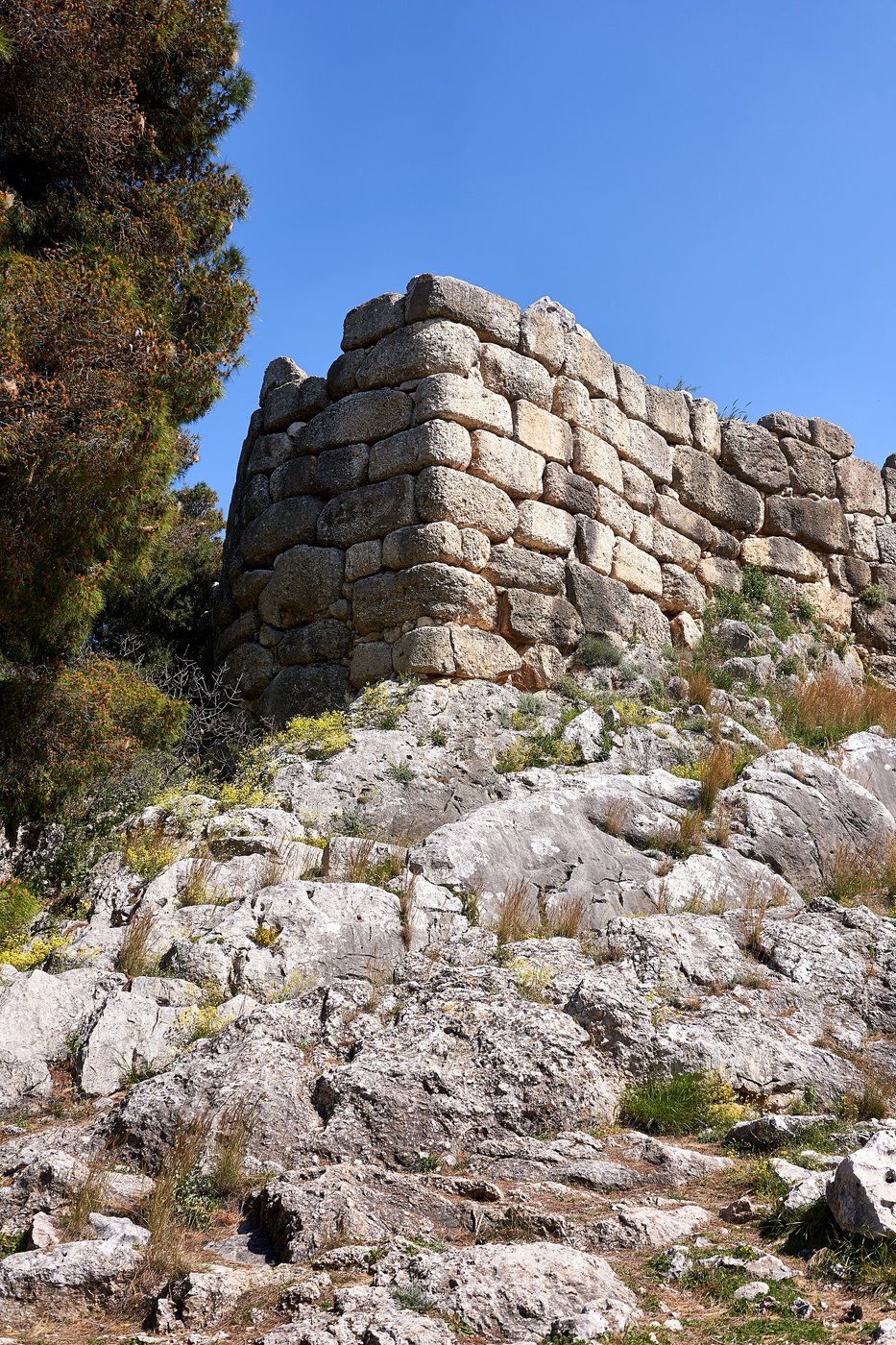
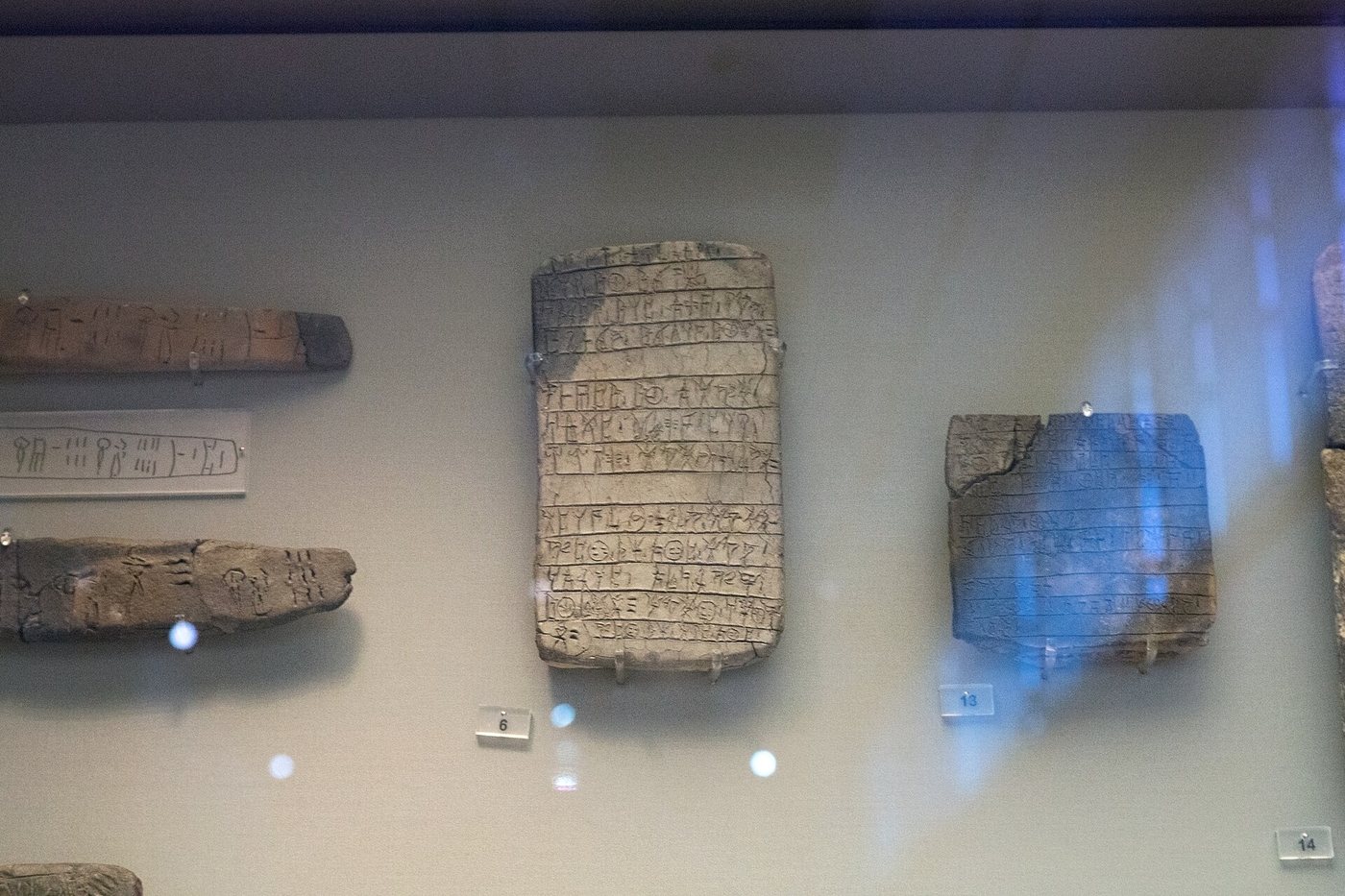
Lion Gate, Mycenae, c. 1250 BCE · Zde, Wikimedia“Cyclopean” wall, Mycenae · G. E. Koronaios, WikimediaLinear B, Pylos, 13th c. BCE (NAMA, incl. An 657: o-u-ru-to o-pi-a₂-ra e-pi-ko-wo, “thus the watchers guard the coast”) · baked when the palace burned · Zde, Wikimedia
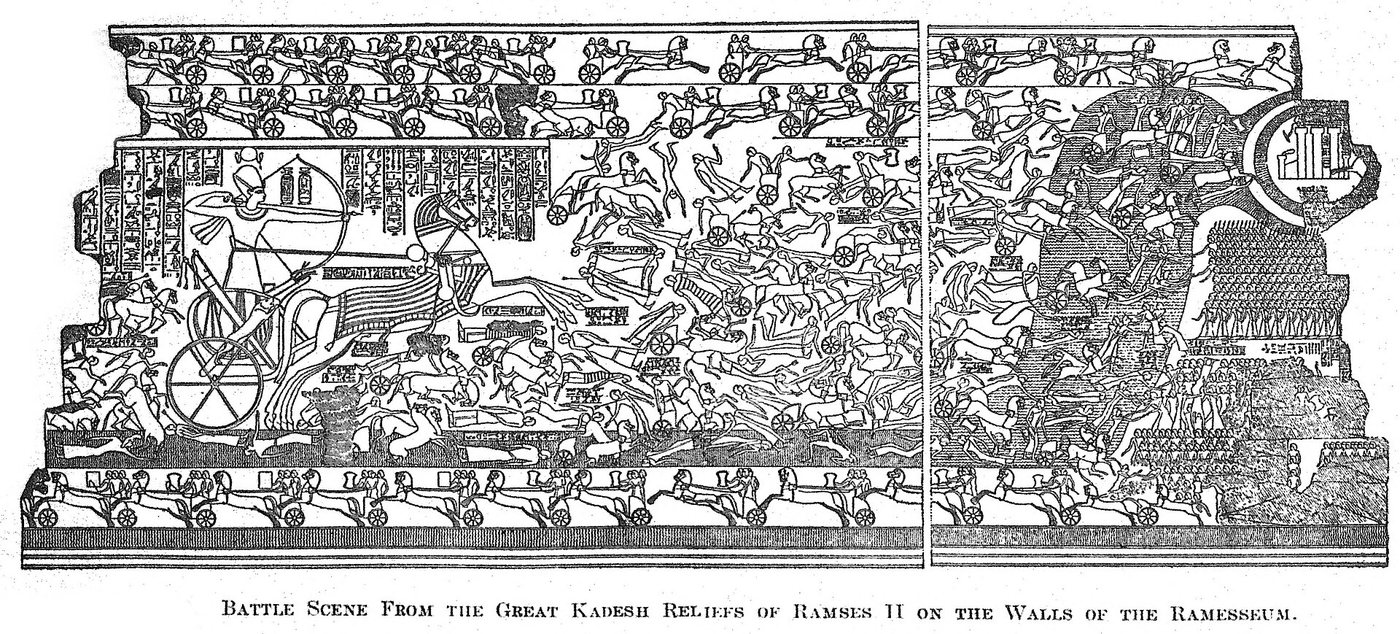
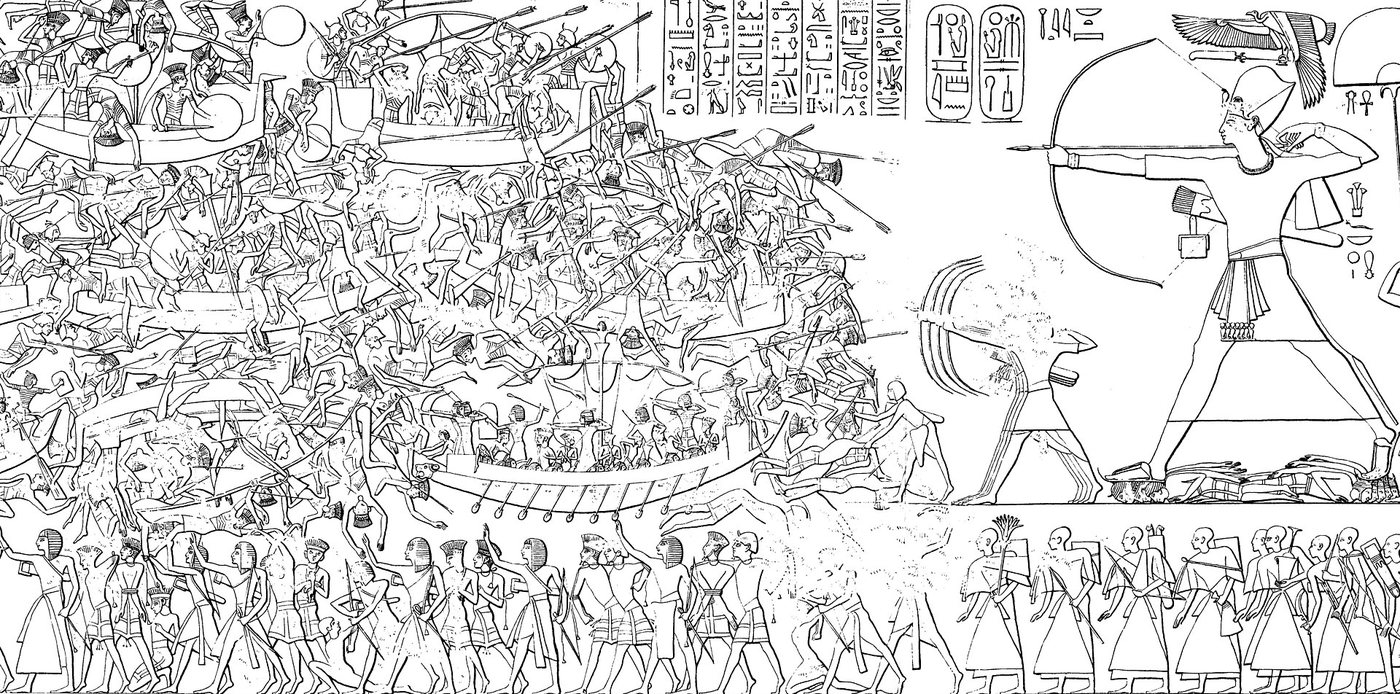
Collapsec. 1200–1150 BCE
Before: Kadesh, 1274 BCE, Ramesses II vs the Hittites: thousands of chariots · Ramesseum relief, drawing pub. J. H. Breasted, WikimediaAfter: Ramesses III vs the Sea Peoples (Denyen, Peleset, Tjeker…), Medinet Habu, c. 1177 BCE · ships, infantry, families on the move · Wikimedia
Dark Agec. 1100–750 BCE
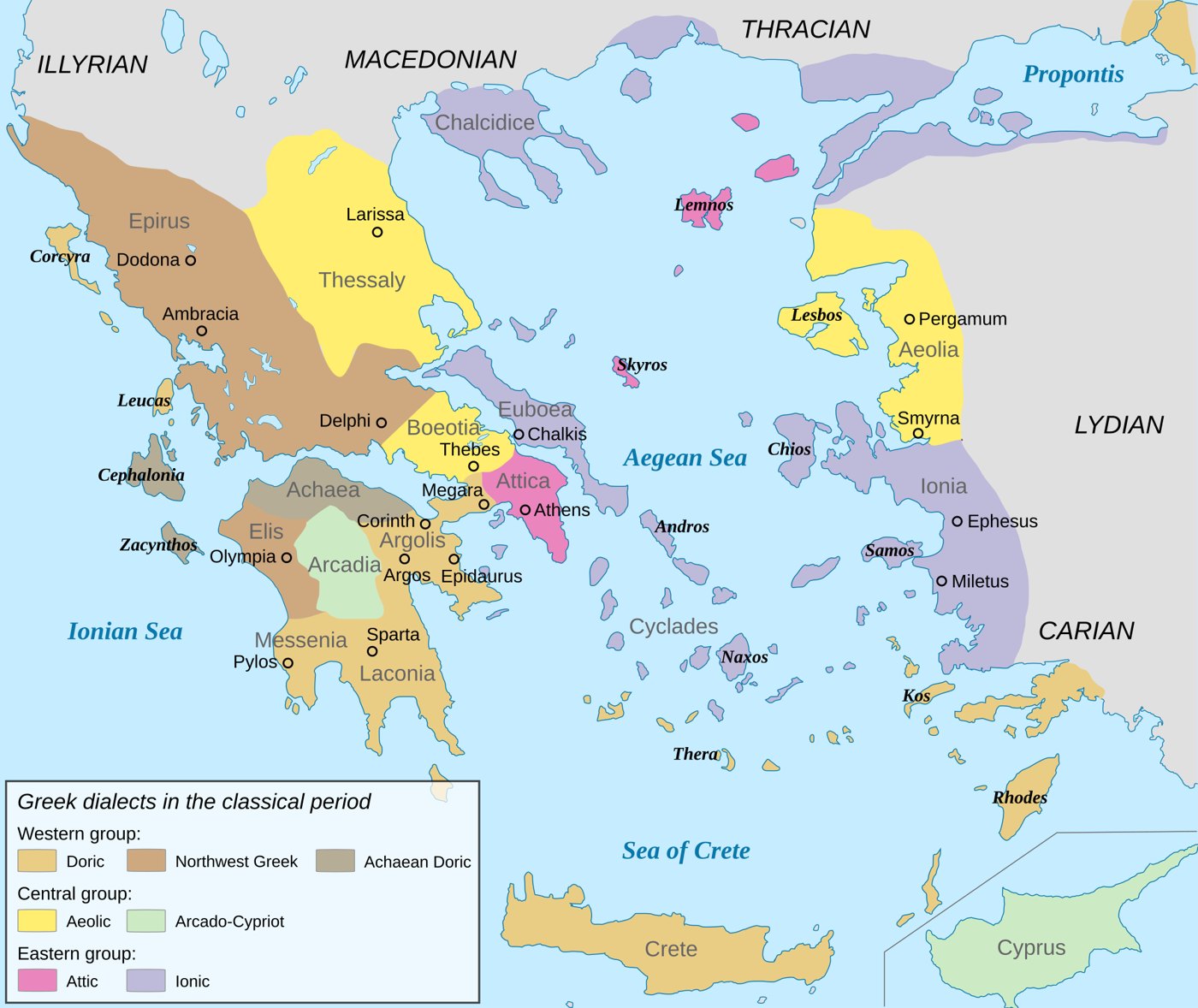
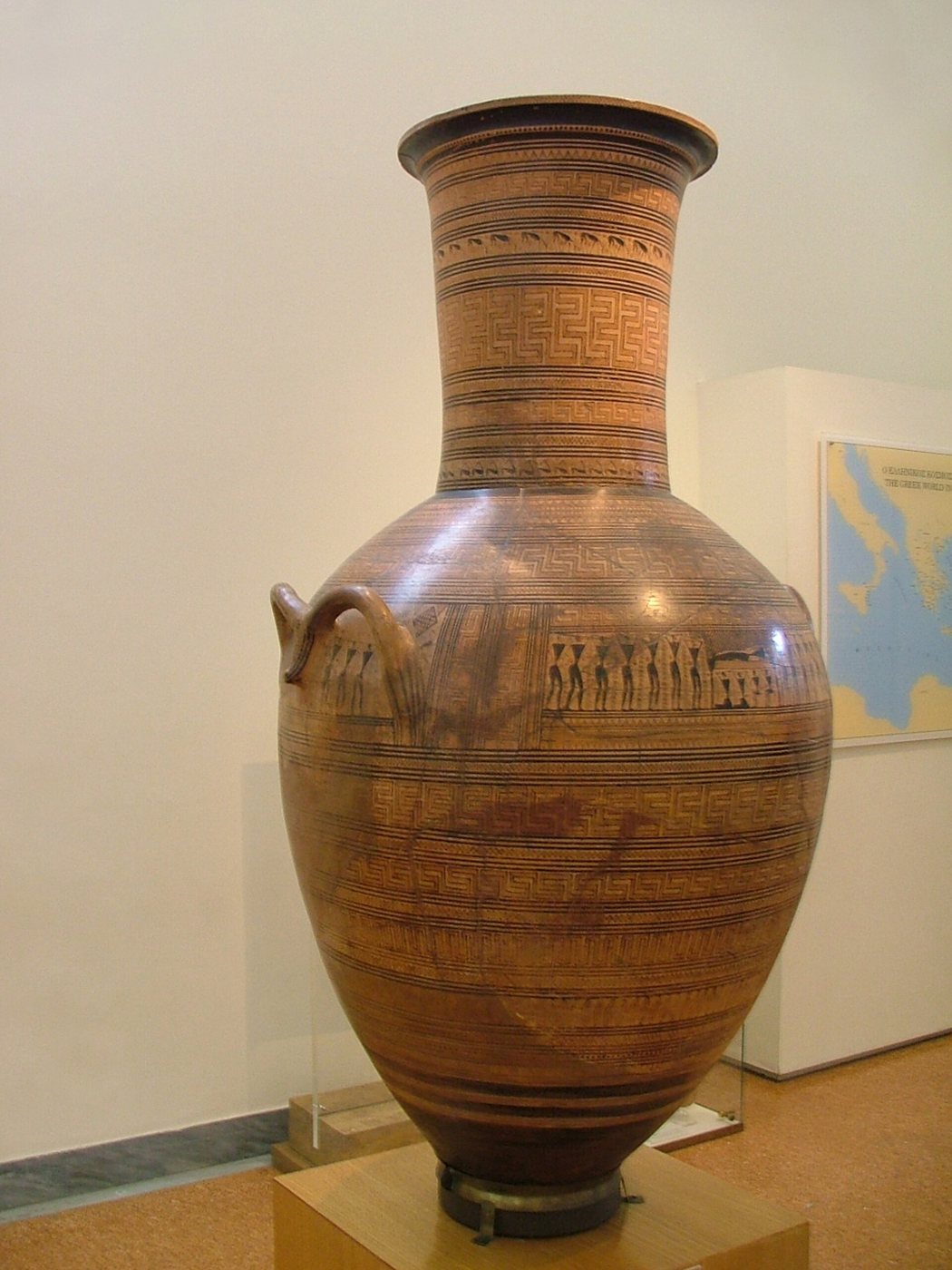
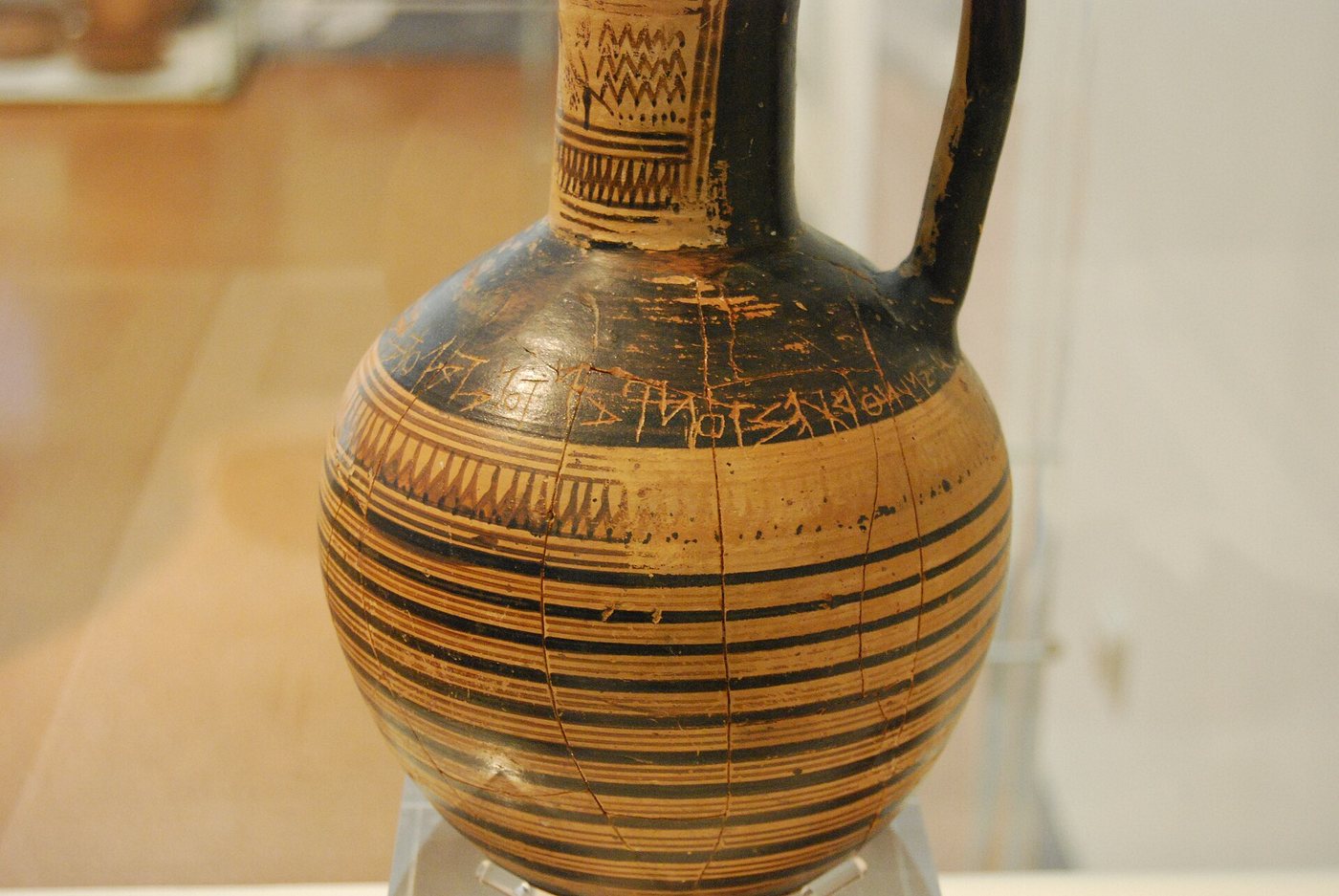
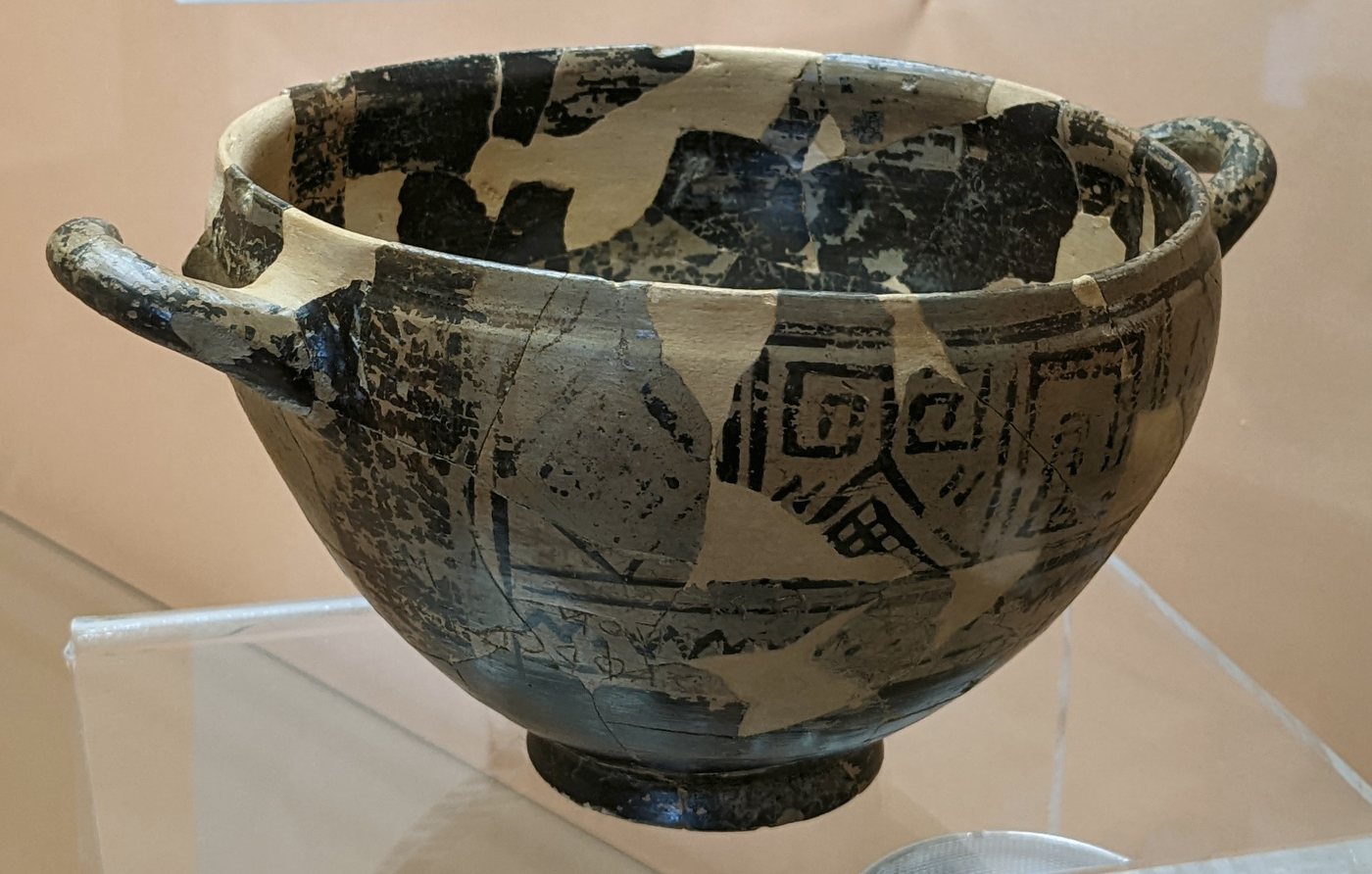
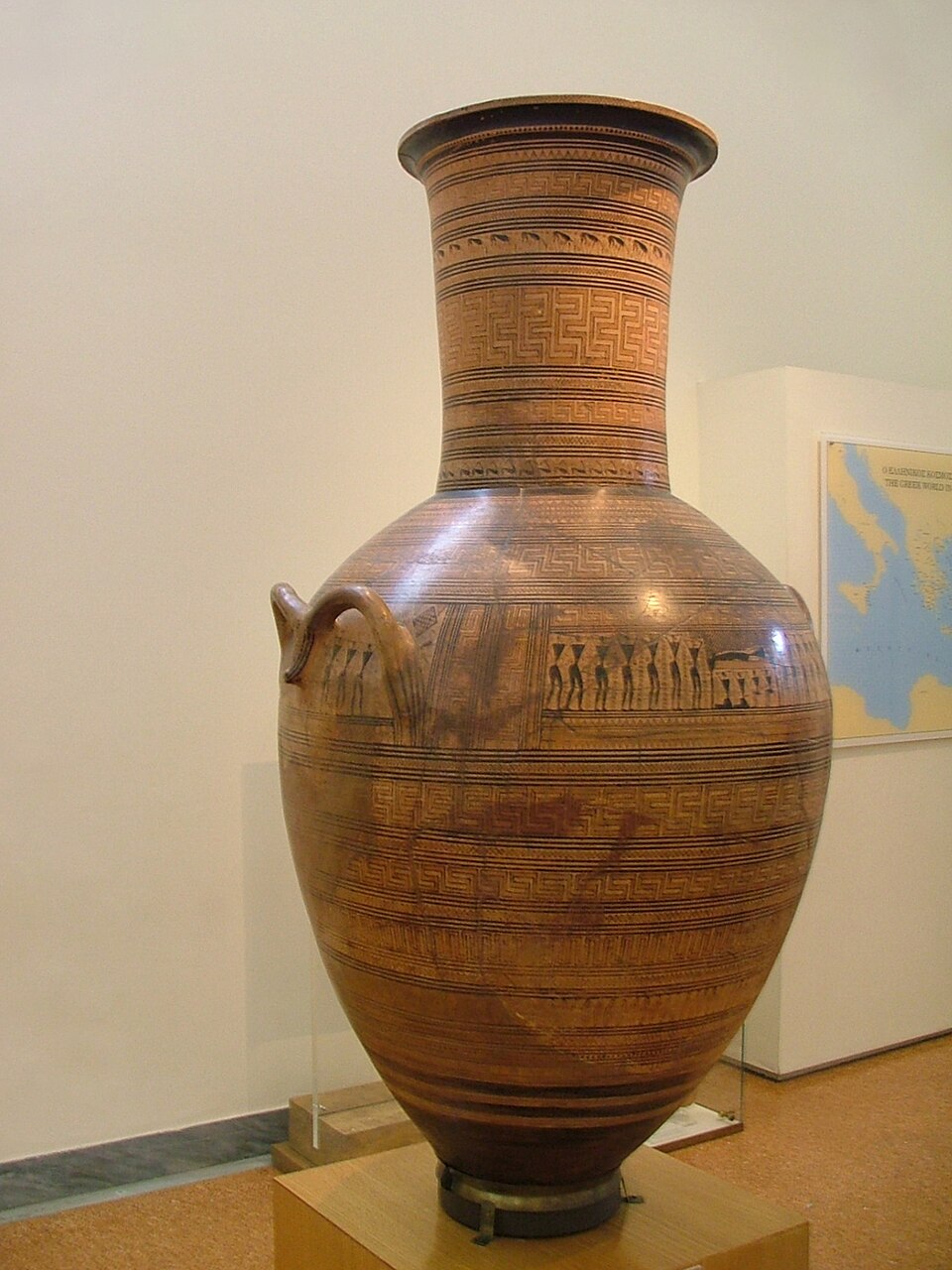
Protogeometric amphora, Athens, 10th c. BCE · compass circles, first horse in Attic vase-painting · Dorieo, WikimediaDialects, classical period: Doric across the Peloponnese, Crete, Rhodes; Arcado-Cypriot (nearest to Mycenaean) stranded in Arcadia + Cyprus · after Woodard, WikimediaGeometric: Dipylon Amphora, Dipylon Painter, c. 760–750 BCE, NAMA · WikimediaAlphabet: Dipylon oinochoe, c. 740 BCE, a hexameter scratched right-to-left: ὃς νῦν ὀρχηστῶν πάντων ἀταλώτατα παίζει… (“whoever of all the dancers now dances most nimbly…”) · Durutomo, Wikimedia“Nestor’s cup”, Pithekoussai, c. 740–720 BCE, rebuilt from fragments: Νέστορος … εὔποτον ποτήριονcfIl. 11.632–637 · Shonagon, Wikimedia
→ Homerc. 750–700 BCE
ϛ΄ Greece after Homer
Greece after Homer
Classical Greece: Athens & Sparta, Leagues, Alexander
Persian Wars 490, 480–79 → Delian League 478/7 → Peloponnesian War 431–404 → Thebes at Leuctra 371 → Chaeronea 338 → Alexander 336–323
democracies & oligarchies; great cities ringed by spheres of influence
The importance of the collective (ostracism)
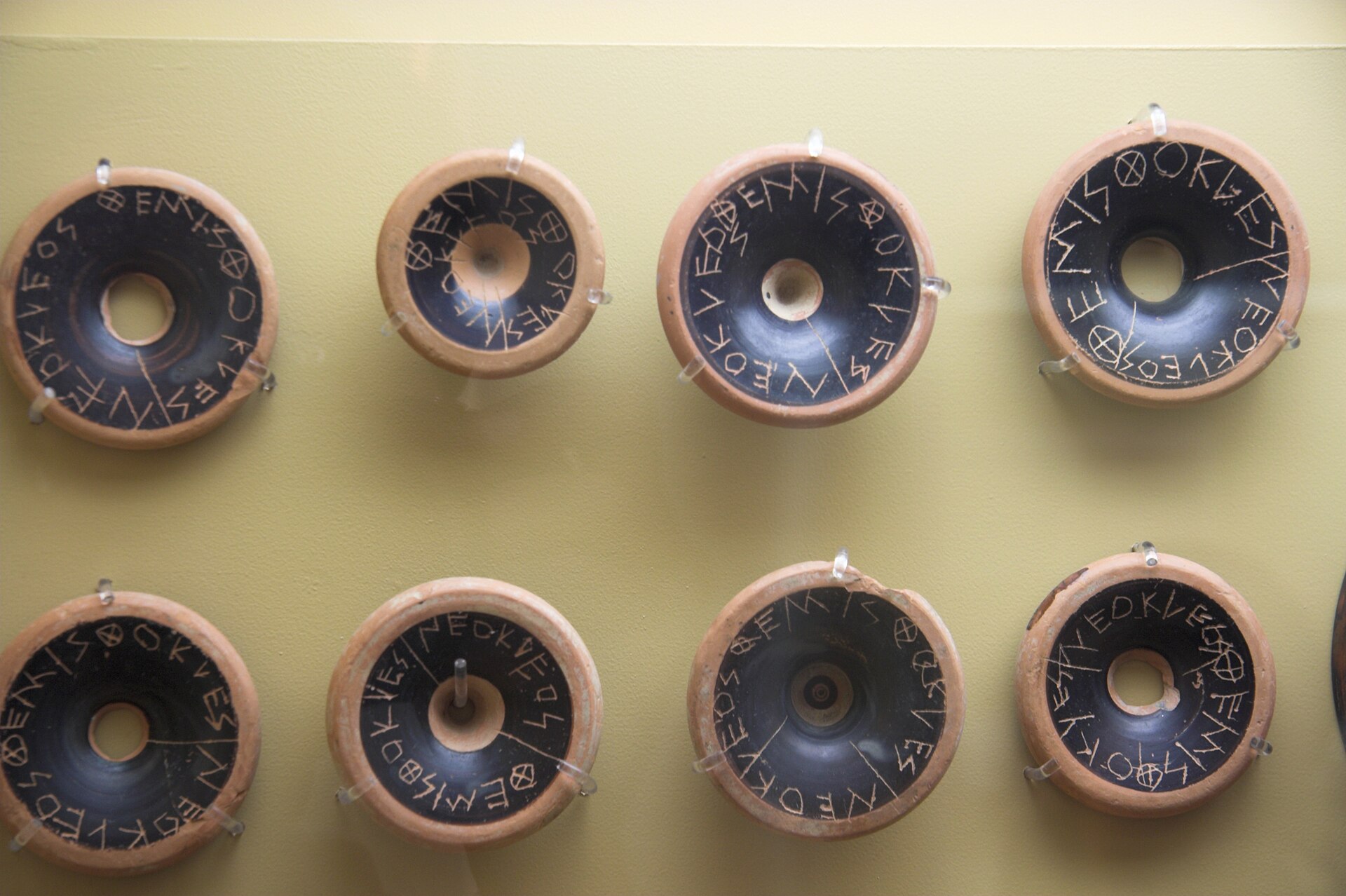
ὄστρακον = potsherd ballot; ≥ 6,000 votes → 10 yrs' exile; first used 487 BCE on Hipparchus son of Charmus (Ath. Pol. 22.4)
Ἀληθής, ᾍδης (*A-wid-), Delphic Golden Mean
ἀ-λήθεια: “un-forgetting”, un-concealment (λήθη, cf the river Lethe)
Hades = “the unseen”: already Plato’s folk etymology, τὸ ἀιδές (Crat. 403a); disputed today
“Stop and show pity beside the marker of Kroisos, dead, whom, when he was in the front ranks, raging Ares destroyed” base inscription · tr. Robinson et al. 1949 via Wikipedia
Man as ideal → man as flawed mortal
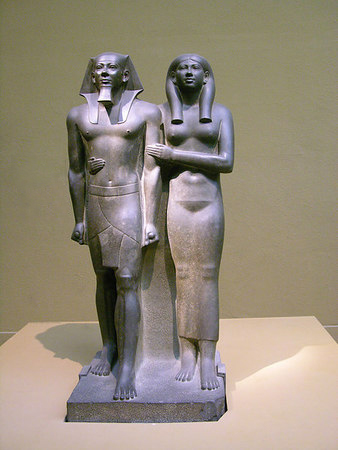
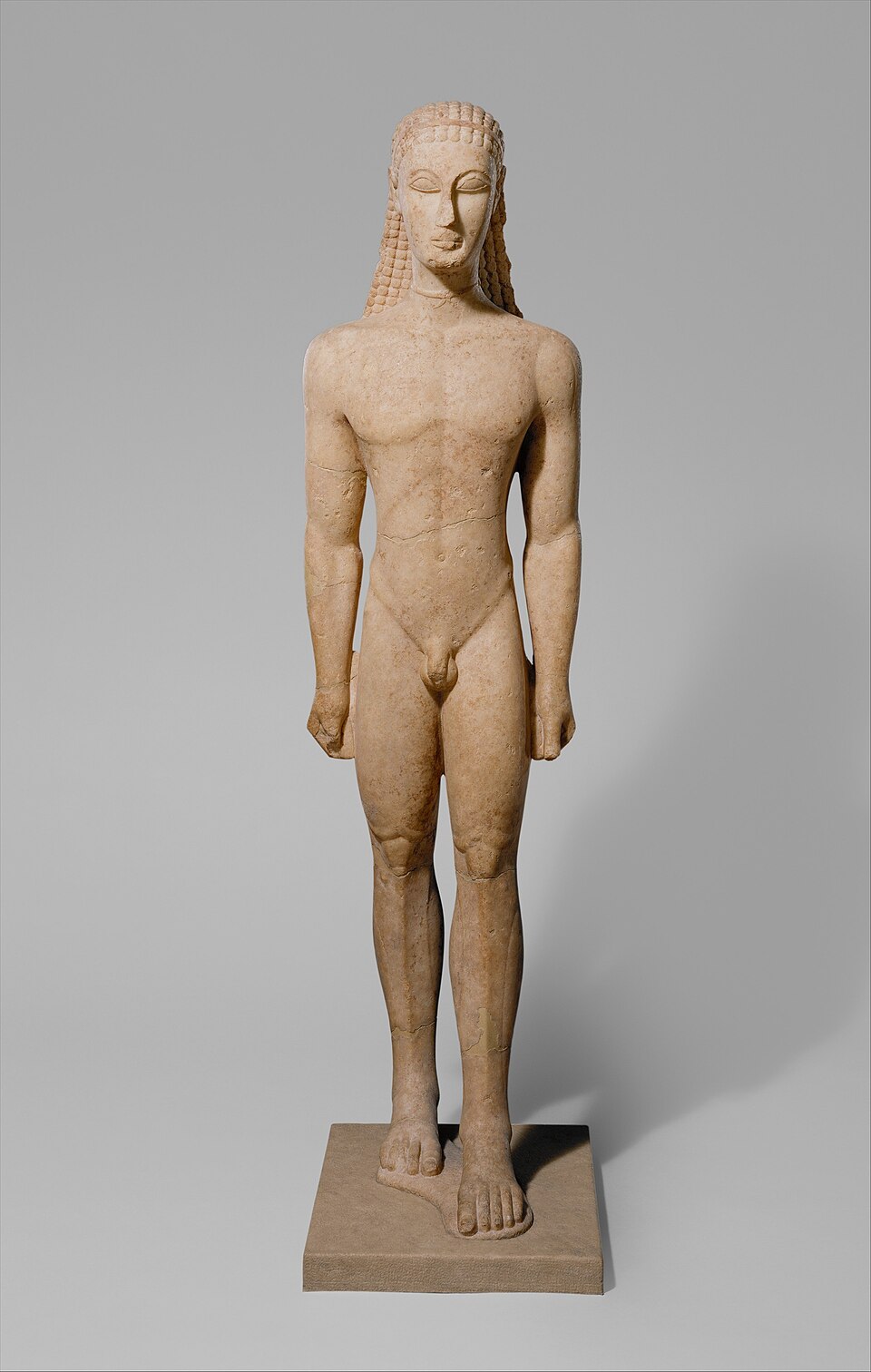
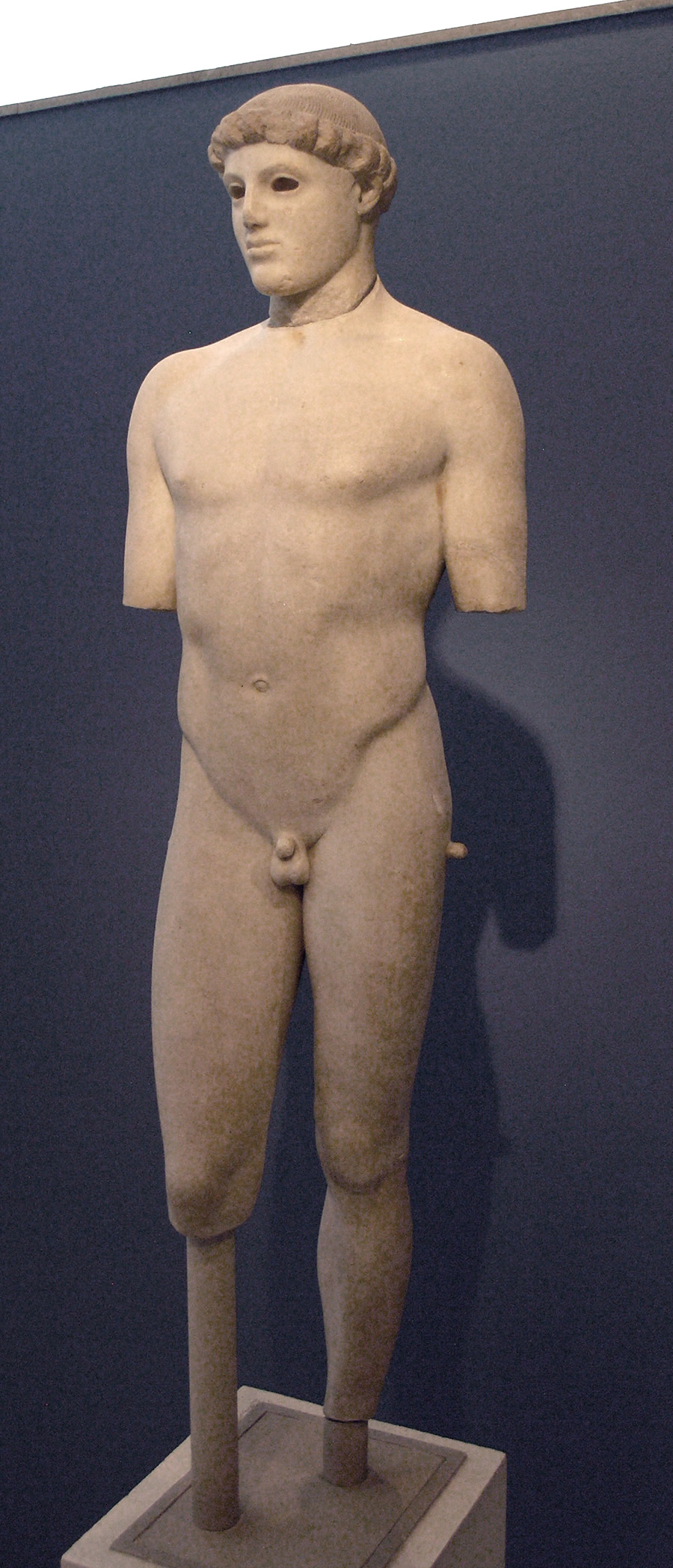
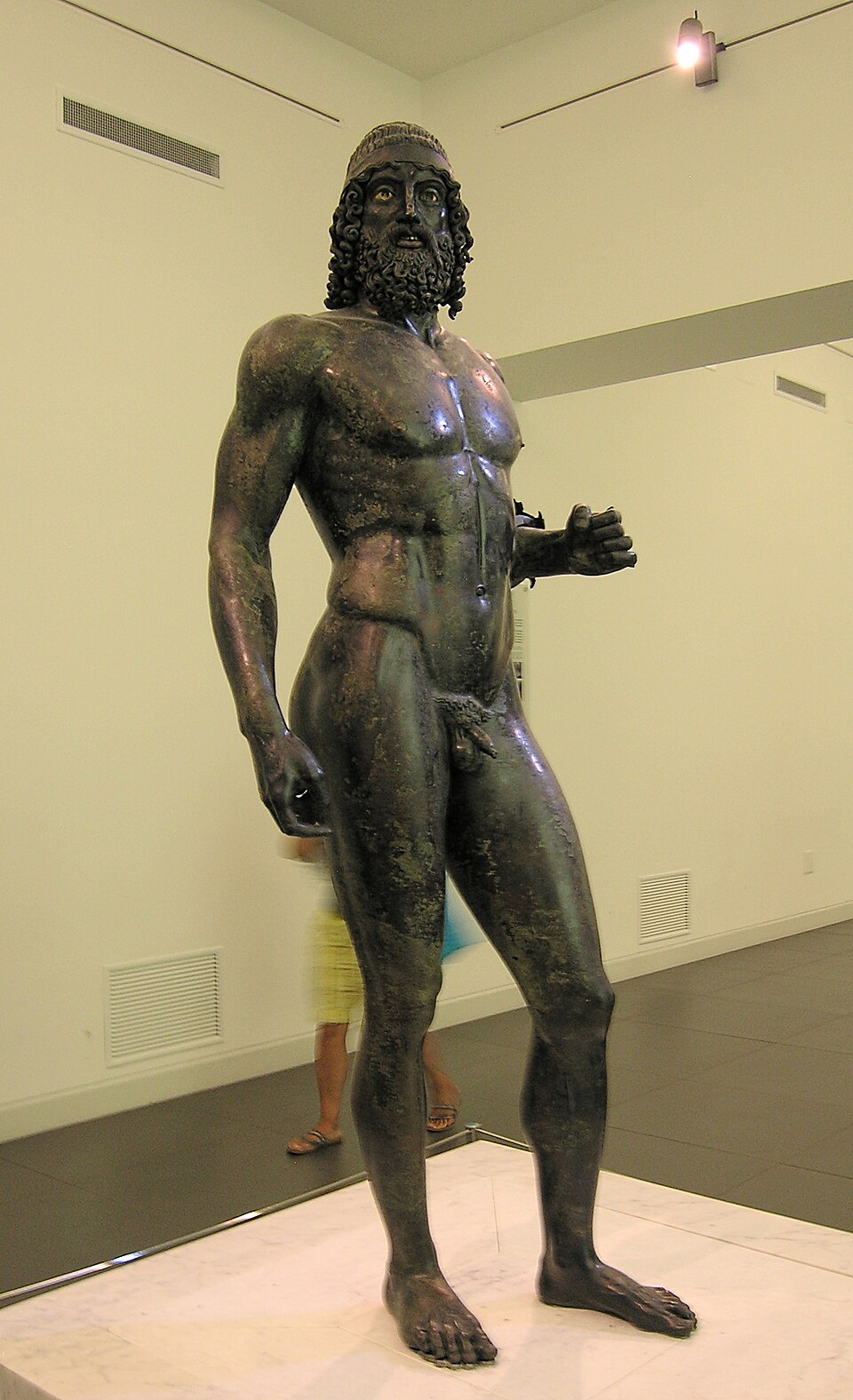
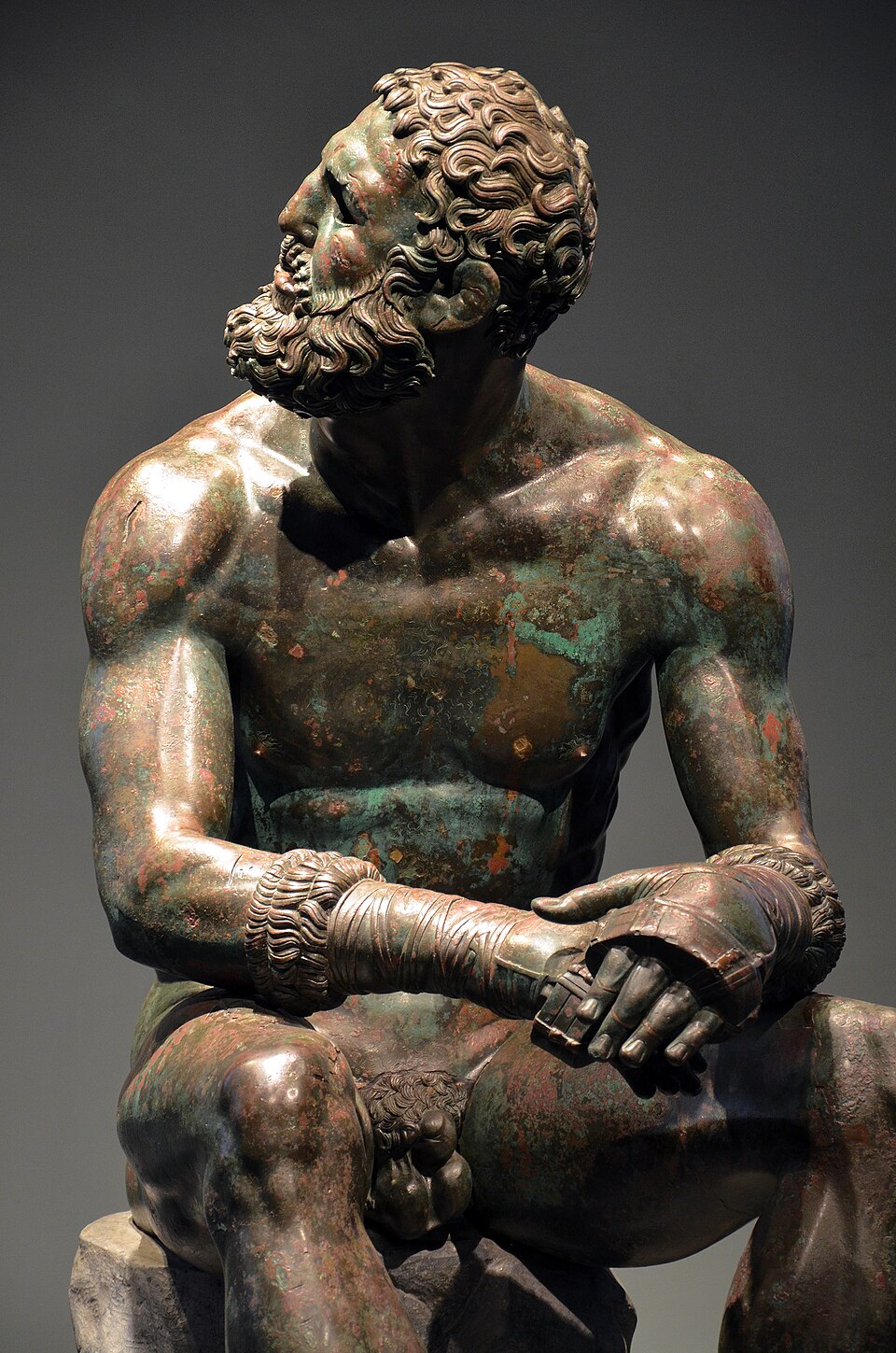
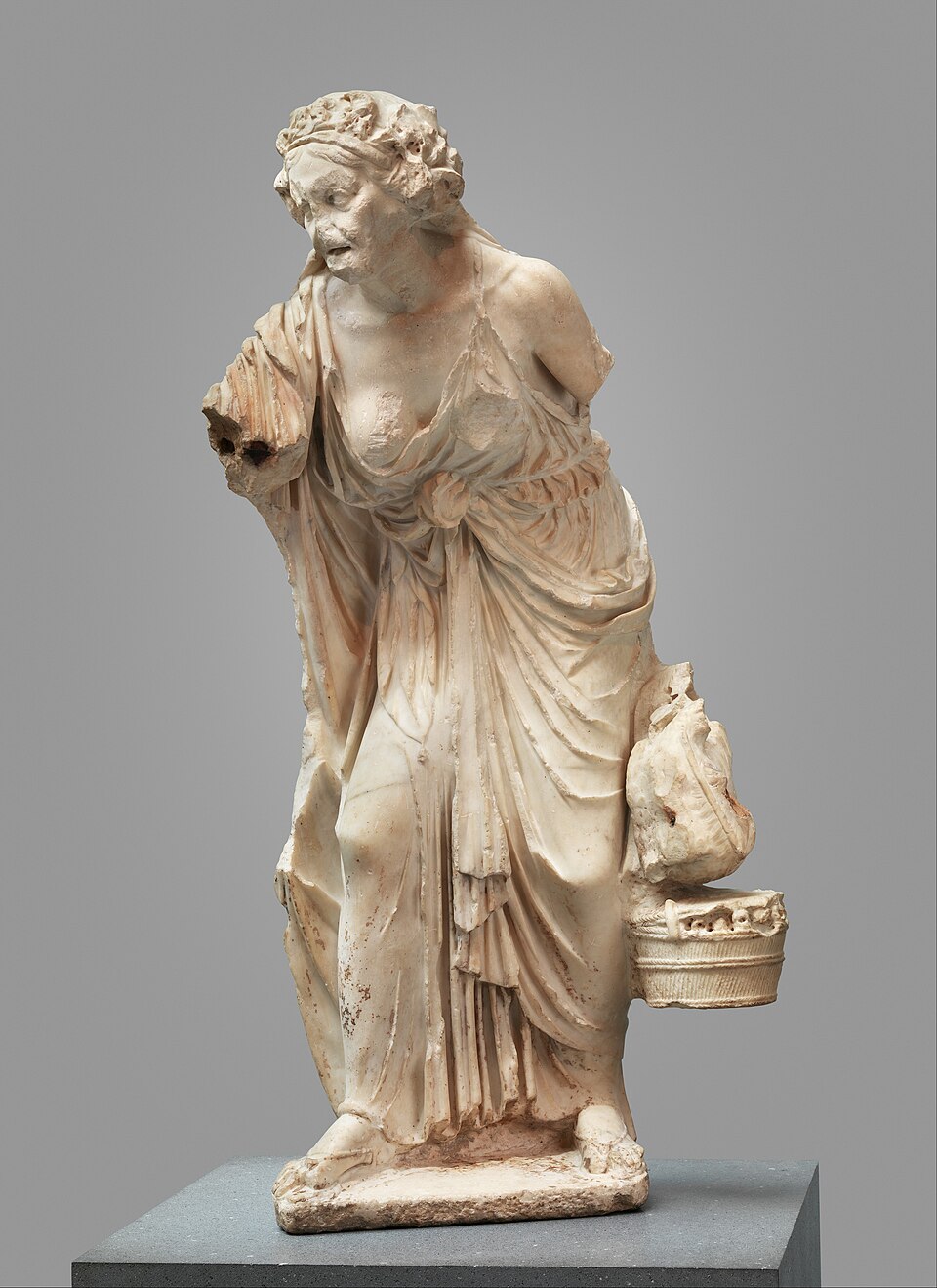
Egypt’s canon, frozen ~2,500 yrs → borrowed whole into the kouros (left foot forward, fists shut, eyes front) → then broken: weight shifts, faces age, bleed, grimace
stone & bronze
Menkaure & queen · Egypt, c. 2490 BC · the canon · MFA Boston · Wikimedia
New York Kouros · Attica, c. 590–580 BC · same stance, now nude, freestanding · Met
Kritios Boy · c. 480 BC · weight on one leg: first contrapposto · Acropolis Mus. · Wikimedia
Riace Warrior A · c. 460–450 BC · veins, copper lips, silver teeth · Reggio · Wikimedia
Boxer at Rest · Hellenistic, c. 330–50 BC · broken nose, cauliflower ears, cuts · Rome · Wikimedia
Old Market Woman · Roman copy of a 2nd-c. BC type · age, poverty, fatigue · Met
clay
Dipylon amphora · Geometric, c. 760–750 BC · mourners = pattern · NAMA 804 · Wikimedia
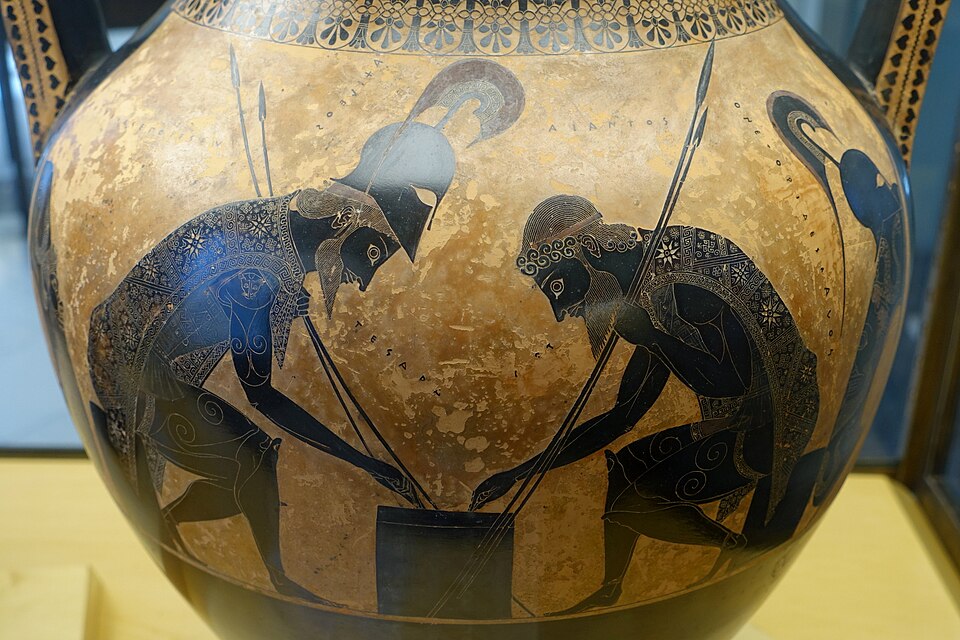
Exekias, Achilles & Ajax at dice · black-figure, c. 540–530 BC · a lull before death · Vatican · Wikimedia
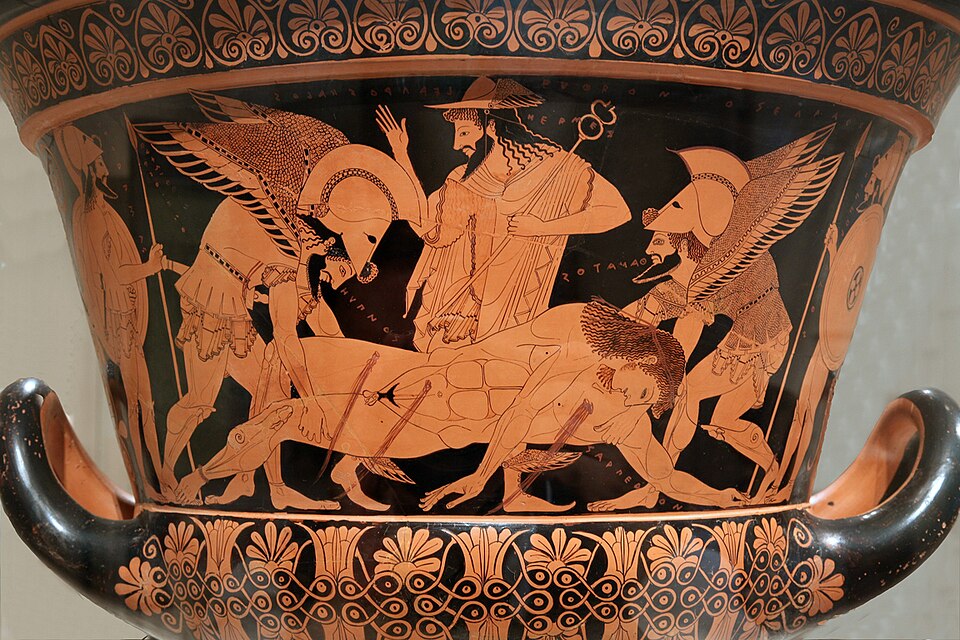
Euphronios, Sarpedon’s body · red-figure, c. 515 BC · anatomy, blood, a dead weight · Cerveteri · Wikimedia
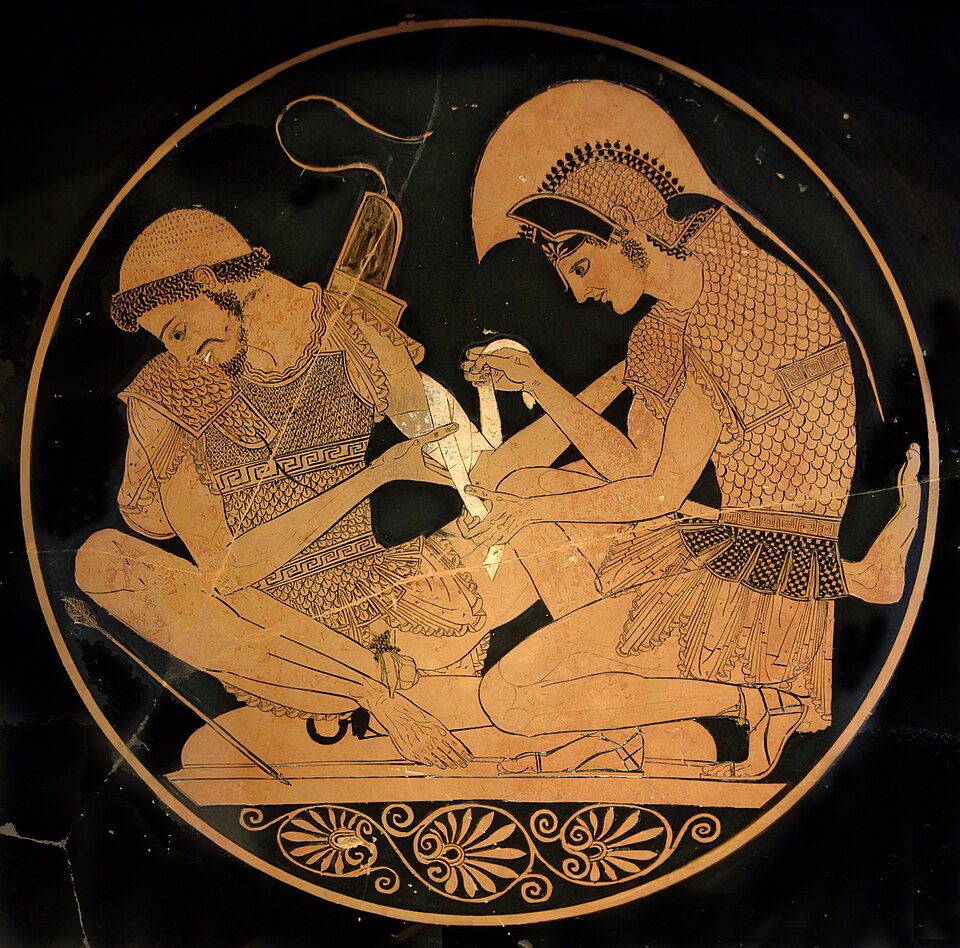
Sosias Painter, Achilles binds Patroclus · c. 500 BC · teeth bared in pain: the imperfect face · Berlin F2278 · Wikimedia
swipe →
Where the philosophers came from
Ionia & its colonies Magna Graecia & Sicily Athens, where many ended up · pre-Socratics · approx. sites
swipe →
η΄ Iliad vs Odyssey
Iliad vs Odyssey
Two proems, five lines each: a god's-scale wrath vs one man. hover / tap a word →
The man: tellme, Muse, the much-turning, who very much
was driven, once he sacked Troy's holy citadel;
of many men he saw the towns and learned the mind,
and many on the sea the pains he suffered in his heart,
striving for his own life and his comrades' return.
for by their very own reckless follies they perished
keyGreek: Perseus (Allen/Monro OCT). English: literal, word order kept (slide tr.); cf. Murray 1919.
μῆνιν ↔ ἄνδρα · first word = the theme: μῆνις, wrath of cosmic scale, a word Homer otherwise keeps for gods (cf Muellner 1996) vs plain ἀνήρ, "a man"
ἄειδε ↔ ἔννεπε · "sing!" (cf ἀοιδή song, ἀοιδός singer) vs "tell!" (ἐνέπω, cf ἔσπετε Il. 2.484): song vs speech, cf ἔπος "word" / ἔπη "epic"; kin in sense, not in root (ἐνέπω < *sekʷ- "say", ϝέπος < *wekʷ-)
θεά ↔ μοι … μοῦσα · a nameless "goddess" vs the Muse, plus a "me": the singer steps into the poem. the Iliad proem has no first person (its Muses appear later: Il. 1.604, 2.484)
Πηληϊάδεω Ἀχιλῆος ↔ πολύτροπον · lineage (patronymic + name) vs a quality, name held back until 1.21 (Ὀδυσῆι). πολύτροπος only Od. 1.1 & 10.330, 0× Iliad; his stock formula is πολύμητις Ὀδυσσεύς (68 lines Od., 19 Il.; Perseus count)
ἄλγεʼ ἔθηκε ↔ πάθεν ἄλγεα · same word, flipped: the wrath inflicts pains on others; the man suffers them himself
ψυχάς ↔ ψυχήν · hurls many souls to Hades vs struggles to keep his own
Διὸς βουλή ↔ σφετέρῃσιν ἀτασθαλίῃσιν · the cause: Zeus' plan vs "their own reckless follies". ἀτασθαλ-: 26 lines in the Odyssey, 5 in the Iliad
Compare intros: μῆνιν vs ἄνδρα, θεά vs Μοῦσα, ἄειδε (ἀοιδός) vs ἔννεπε (ἔπος), patronymic Πηληϊάδεω vs qualitative πολύτροπον
Od. 1.1 has πολύτροπον; πολύμητις is the everyday formula elsewhere
Iliad: man can strive to the "Form" of Gods. Odyssey: godly will as karma? Less Διὸς βουλή, more plurality of wills; man endures blind fate functionalistically. Divine wrath vs a mortal man.
Iliad: gods as emanations in a Platonic hierarchy? θεά is nameless. Distinct roles? Odyssey: gods with distinct roles, more animistic in their domains: Poseidon (sea, grudge), Athena (craft, μῆτις)
Iliad: early oral singers, old society of clans & families. Odyssey: established epic tradition, new society of new men (novi homines)
the Odyssey stages its own bards: Phemius ἀοιδὸς ἄειδε (1.325), Demodocus (Od. 8)
"men praise most the song that is νεωτάτη, newest" (1.351–52) cf an audience that already knows the old ones
ἐκ γὰρ Ὀρέσταο τίσις ἔσσεται: payback will come from Orestes (1.40)
νῦν δʼ ἁθρόα πάντʼ ἀπέτισεν: "now he has paid it all off, in one sum" (1.43) → a ledger: act → consequence. Gods not wholly responsible for the folly of man.
A will above Zeus? μοῖρα / αἶσα
Il. 16.441–43 Hera to Zeus, on Sarpedon (= 22.179–81, Athena, on Hector): ἄνδρα θνητὸν ἐόντα πάλαι πεπρωμένον αἴσῃ … ἔρδʼ· ἀτὰρ οὔ τοι πάντες ἐπαινέομεν θεοὶ ἄλλοι: "a mortal, long doomed by fate? Do it; but we other gods won't all approve" → Zeus could; fate = an order he keeps
Il. 17.321ὑπὲρ Διὸς αἶσαν, "beyond Zeus' portion" → fate can be Zeus' own dispensation
Od. 3.236–38 Athena: death, common to all, "not even gods can ward off from a man they love" when μοῖρʼ ὀλοή takes him down
explicit only later: Aesch. PV 515–18: who steers ἀνάγκη? "the three-formed Moirai and mindful Erinyes"; Zeus "could not escape what is fated"
verdict: Homer wavers; the Odyssey leans to an impersonal order (death, τίσις) gods respect; fully above Zeus only in tragedy
owner's thesis, hand-inked: circle = endless cycle · triangle = ascension to unity
Thesis: Greek religion nearly trended towards Buddhism, if not for Parmenides' monism & Platonic Forms
circle existed in Greece: Pythagoras, Empedocles, Orphic gold tablet, Thurii (4th c. BC): "I flew out of the circle of wearying heavy grief" (tr. Edmonds)
triangle: Parmenides' one unchanging Being (ἔστιν) → Plato's Forms, the Good → Plotinus' One
the fork: Buddha = impermanence (anicca) + no-self (anattā); Parmenides = change is illusion, Being is one. Same flight from flux, opposite goals: cessation vs union
Plato keeps both: rebirth (Myth of Er, Rep. 10) + ascent (Symp. ladder) → the triangle swallows the circle
fact check: ✓ Odyssey moves the cause from Διὸς βουλή to human ἀτασθαλίαι · ✓ a Greek rebirth-cycle strand was real · ✗ Homer has no rebirth (the ψυχή is a shade in Hades): "karma" here = consequence within one life and one house
Homer sung: reconstructions vs Göransson
Stefan Hagel (Austrian Academy of Sciences), Homeric singing with a reconstructed lyre · YouTubethe proem above, in hexameter with pitch accent, phorminx · YouTubeNolan's brief: no orchestra; lyre, aulos, 35 bronze gongs (Rolling Stone) · Universal Pictures
also: all of Od. 6 (Nausicaa) sung in Greek, 51 min · nb an AI voice ("Philoxeine"), not a human bard
“I should choose, so I might live on earth, to serve as the hireling of another, of some portionless man whose livelihood was but small, rather than to be lord over all the dead that have perished.”
“I would rather be some nameless serf and live than rule all the dim dead”
ἐπάρουρος “on the soil”, above ground · θητευέμεν work as a θής, a hired day-labourer (free, not a slave) · ἄκληρος “without a κλῆρος”, landless: the bottom rung of the bottom rung
cfIl. 9.413ὤλετο μέν μοι νόστος, ἀτὰρ κλέος ἄφθιτον ἔσται “lost is my home-return, but my renown shall be imperishable”: the Iliad’s Achilles chose the glory; the dead Achilles wants the νόστος
Ἑρμῆς ψυχοπομπός, guide of souls ↓
Hermes of Praxiteles, Olympia · Wikimedia (Dwaisman, CC BY-SA 4.0)
“And tell me of noble Peleus … whether he still has honor among the host of the Myrmidons, or whether men do him dishonor throughout Hellas and Phthia, because old age binds him hand and foot.” … “I would give many a one of those who do him violence and keep him from his honor, cause to rue my strength” (503)
fact-check ✓ old father dishonoured, men “do him violence” (βιόωνται) and keep him from τιμή · ✗ no suitors at Peleus’ court: that is Penelope
cf Penelope beset in Ithaca · and Laertes, the other old father, sleeping “in the dust by the fire” among the slaves (Od. 11.187–196): the dead son can’t defend the house; the living one comes home to do it
The underworld as a dank, dark place at the edge of Ocean vs deep underground?
Od. 11: Odysseus sails there, to “the limits of deep-flowing Ocean”, Cimmerians “wrapped in mist and cloud” (11.13–19); no descent
Il. 20: Aidoneus leaps from his throne “lest above him the earth be cloven by Poseidon” (20.61–65): underground · Tartarus “as far beneath Hades as heaven is above earth” (8.13–16)
“dank” = εὐρώεις, mouldy: Hades’ house (Il. 20.65, Od. 10.512), the paths of the dead (Od. 24.10)
Diverges within the Iliad/Odyssey and between Iliad & Odyssey
unburied Patroclus can’t cross the river: “bury me … that I may pass the gates of Hades” (Il. 23.71–74) ↔ the unburied suitors walk straight in, “our bodies even now lie uncared-for in the halls of Odysseus” (Od. 24.186–187)
Menelaus skips Hades altogether: sent alive to the Elysian plain “at the ends of the earth” (Od. 4.561–569)
How does Hades evolvecf Hesiod, Homeric Hymns, Lyric, Orphic → scraps ↓
The Unseen: κλέος ἄφθιτον, ostracization, Hades’ epithet name
Ἀΐδης read as ἀ-ειδής “unseen” already by Plato (Crat. 403a); a folk etymology, the real one is disputed · the “cap of Hades” makes Athena invisible (Ἄϊδος κυνέη, Il. 5.845)
death = being unseen and unremembered → κλέος ἄφθιτον, “unwithering” fame, is the only way to stay visible · Peleus dishonoured, cut off without his son
Achilles in Od 11 vs Iliad on kleos ↑ · Catabasis in Il 24 vs Od 24
Il. 24: Hermes as Priam’s πομπός, escort (24.153), by night, to the man of death · the wand lines Il. 24.343–4 = Od. 24.3–4, word for word
Il. 24 a living king led to the dead hero; Od. 24 dead men led to the dead heroes, where Achilles’ funeral is told: an epilogue to the Iliad
Protonekyia vs Deuteronekyia. What’s striking? If no major differences, why so many analysts?
Od. 11 vs Od. 24.1–204
Aristarchus athetised the Deuteronekyia (schol. MV on 24.1) and made 23.296 the “end” (πέρας / τέλος)
language: normal · Page: “not at all exceptional in either number or nature of abnormalities” · statistical outlier is Book 11, not 24 (Jones & Gray 1972)
worldview: not normal · a divine guide, unburied souls admitted, new landmarks: White Rock, Gates of the Sun, District of Dreams (24.11–12)
analysts (Wilamowitz, Focke, Page) vs unitarians (Scott, Erbse, Finley) → my answer: neither; composed in the tradition, incorporated in the 6th c. BCE (Nagy’s “definitive” period)
Toponymic Cyllenian, Orphic traditions of psychopomp → ↓
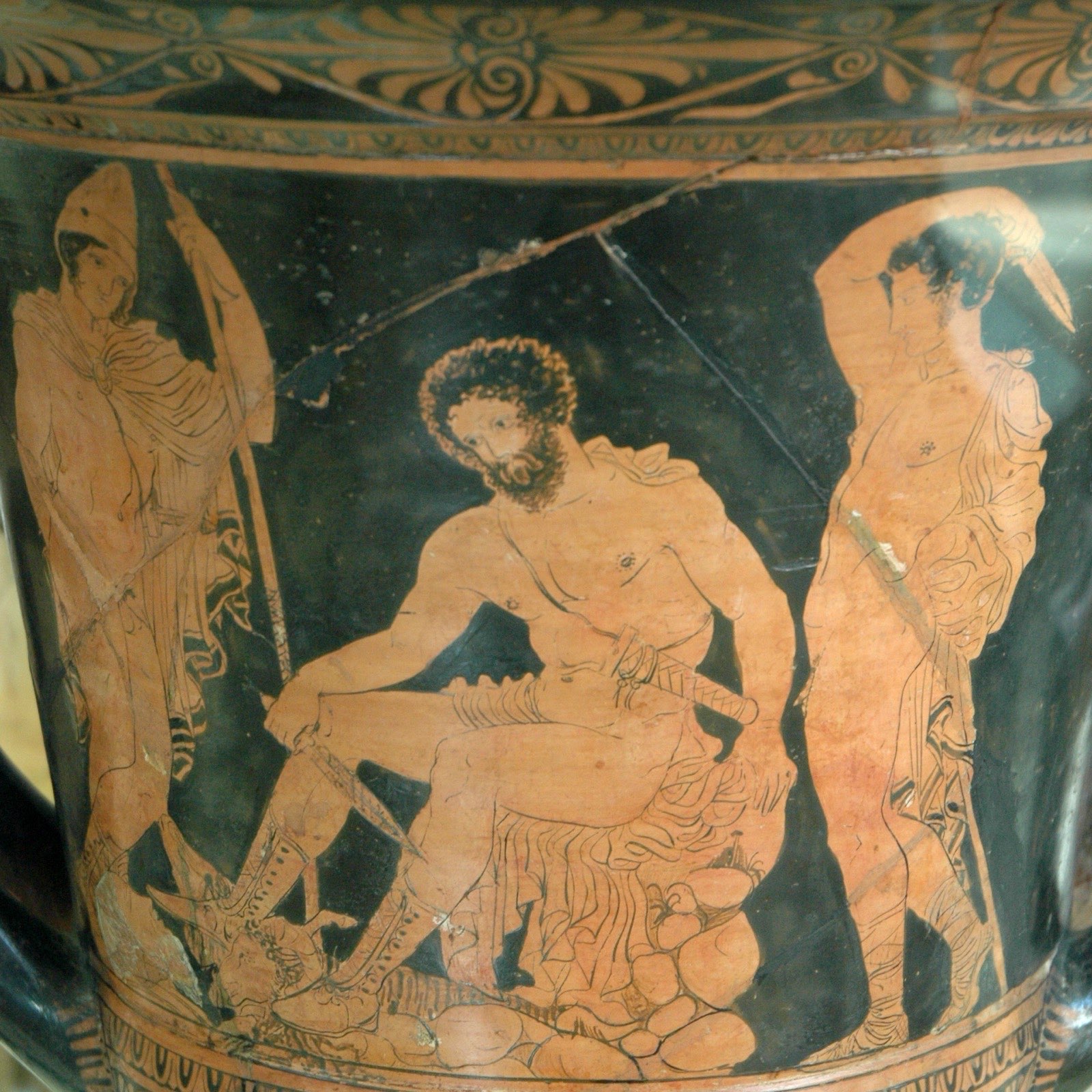
Odysseus and the shade of Tiresias · Lucanian calyx krater, Dolon Painter, c. 380 BCE · Cabinet des Médailles, Paris 422 · Wikimedia
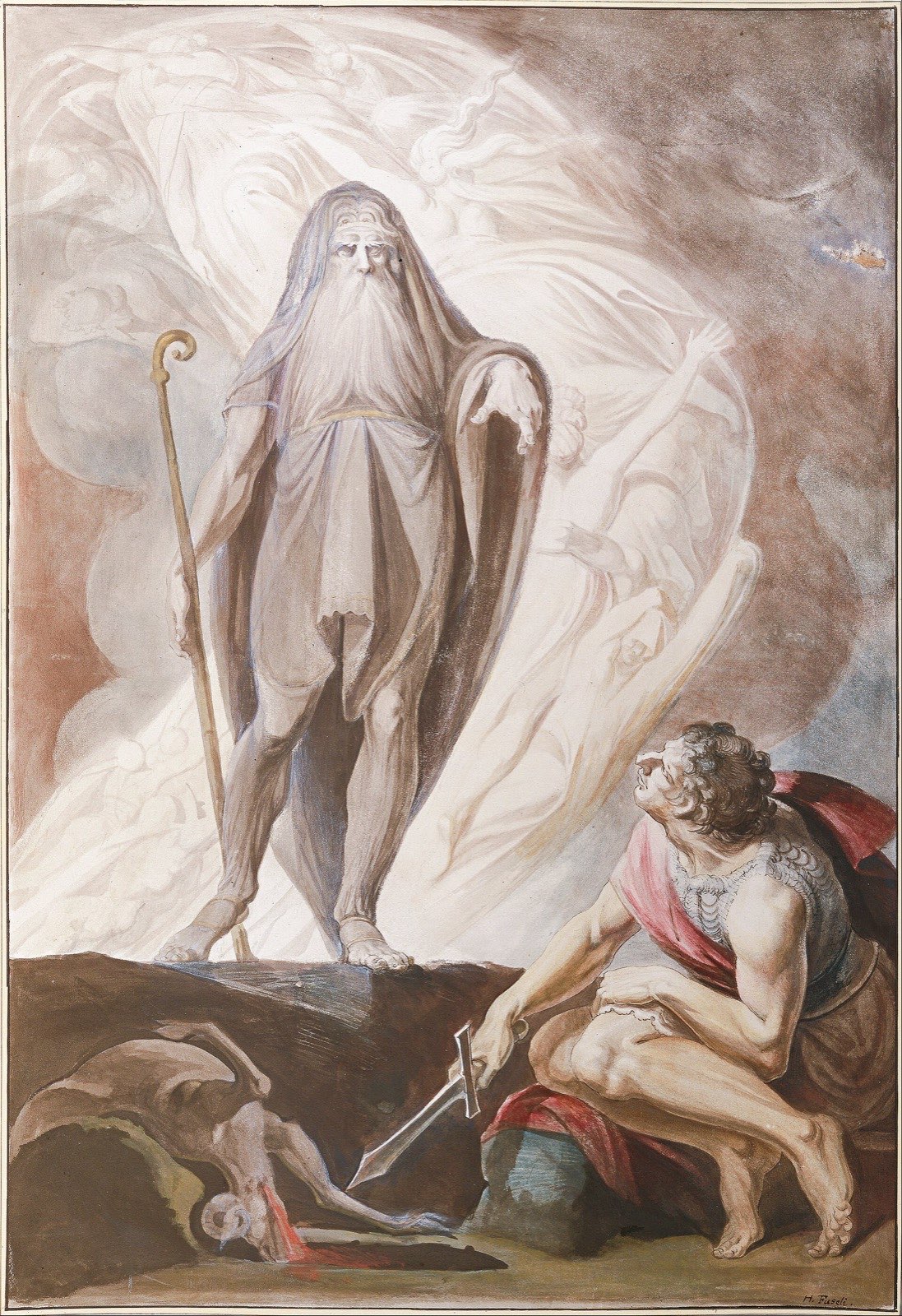
Tiresias foretells the future to Odysseus · J. H. Füssli (Fuseli), 1780–85 · Albertina, Vienna · WikimediaThe Odyssey (Christopher Nolan, 2026) · official trailer, Universal Pictures · no official underworld clip released; the Hades scene (Tiresias = James Remar; extras buried in sand) is in the film itself · how it was shot
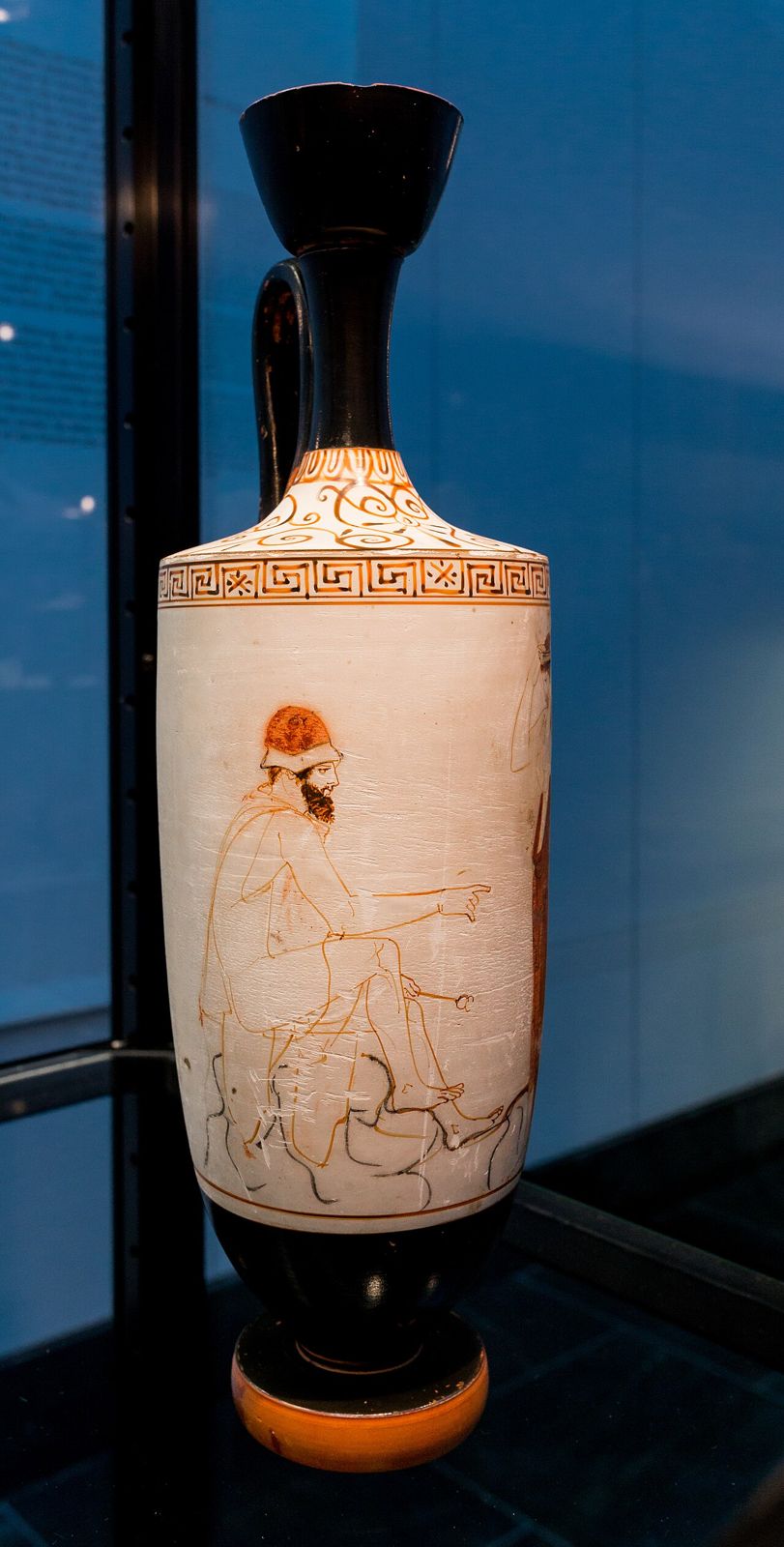
“Meanwhile Cyllenian Hermes called forth the spirits of the wooers. He held in his hands his wand, a fair wand of gold … and they followed gibbering. And as in the innermost recess of a wondrous cave bats flit about gibbering … so these went with him gibbering, and Hermes, the Helper, led them down the dank ways.”
The only psychopomp in Homer. Everywhere else the ψυχή goes down to Hades unguided (Il. 1.3, 3.322, 16.856 …)
Κυλλήνιος: hapax, and the only toponymic epithet on a major god in the whole Odyssey → a cult site: Mt Cyllene, Arcadia, Hermes’ birthplace cfἭρη Ἀργείη, Ἀλαλκομενηῒς Ἀθήνη (Il. 4.8), Σμινθεῦ (Il. 1.39)
contracted Ἑρμῆς (24.1) vs Homeric Ἑρμείας again at 24.10, same metre
Hermes Psychopompos, seated by a tomb, waits for the dead woman · Attic white-ground lekythos, Phiale Painter, c. 440–430 BCE · Antikensammlungen, Munich 2797 · Wikimedia (ArchaiOptix, CC BY-SA 4.0)
“the echoing halls of … strong Hades, and of awful Persephone. A fearful hound guards the house in front … On those who go in he fawns … but suffers them not to go out back again.”
“You will find a spring on your left in Hades’ halls and by it the cypress with its luminous sheen. Do not go near this spring … You will find another, cold water flowing from Memory’s lake.” · say: “I am a child of Earth and starry Heaven”
Petelia tablet, British Museum, 4th–3rd c. BCE (cf Hipponion, c. 400) · tr. Jenner; last line literal
≠ Homer: a map and a password; memory saves. Homer’s shades have lost their wits; only Tiresias keeps his φρένες (Od. 10.493–495)
Orphic Hymn 57 · Chthonic Hermes
“Hermes I call, whom Fate decrees to dwell in the dire path which leads to deepest hell … To wretched souls the leader of the way … For Proserpine thro’ Tart’rus dark and wide gave thee forever flowing souls to guide.”
Orphic Hymn 57 (Taylor’s no. 56) · tr. Thomas Taylor, 1792 · Greek not verified online
Hermes’ guiding is now his job, assigned by Persephone
What is life? θυμός vs γαστήρ
Iliad: θυμός ascendant, spirit for the pursuit of κλέος, the glory great heroes need
Odyssey: γαστήρ, the belly: survival over glory → the necessities of food and drink
Pietro Pucci, Odysseus Polutropos (Cornell 1987), ch. “The Heart (Thumos) of the Iliadic Lion and the Belly (Gastēr) of the Odyssean Lion”: θυμός drives Iliadic heroism, the γαστήρ is the emblem of Odyssean heroism (paraphrase)
“But bid thou the Achaeans by their swift ships to taste of food and wine; since therein is courage and strength.”
Odysseus to Achilles · Il. 19.160–161 (speech 155–172) · tr. Murray
Achilles:πρὶν δ᾽ οὔ πως ἂν ἔμοιγε φίλον κατὰ λαιμὸν ἰείη | οὐ πόσις οὐδὲ βρῶσις ἑταίρου τεθνηῶτος “till that shall be, down my throat, at least, neither drink nor food shall pass, seeing my comrade is dead” (19.209–210) → his heart is set on “slaying, and blood, and the grievous groanings of men” (214)
fact-check ✓ it is Odysseus, Il. 19.155–172; again at 19.225–231 (“with the belly the Achaeans cannot mourn a corpse”)
“for there is nothing more shameless than a hateful belly, which bids a man perforce take thought thereof, be he never so sore distressed and laden with grief at heart”
Odysseus among the Phaeacians · Od. 7.216–218 · tr. Murray
γαστέρα δ᾽ οὔ πως ἔστιν ἀποκρύψαι μεμαυῖαν, | οὐλομένην “a ravening belly may no man hide, an accursed plague” · it even launches the warships (Od. 17.286–289)
grief says “don’t eat”: the Iliad’s hero obeys grief, the Odyssey’s obeys the belly · and the dead? they need blood to speak at all (Od. 11.147–149)
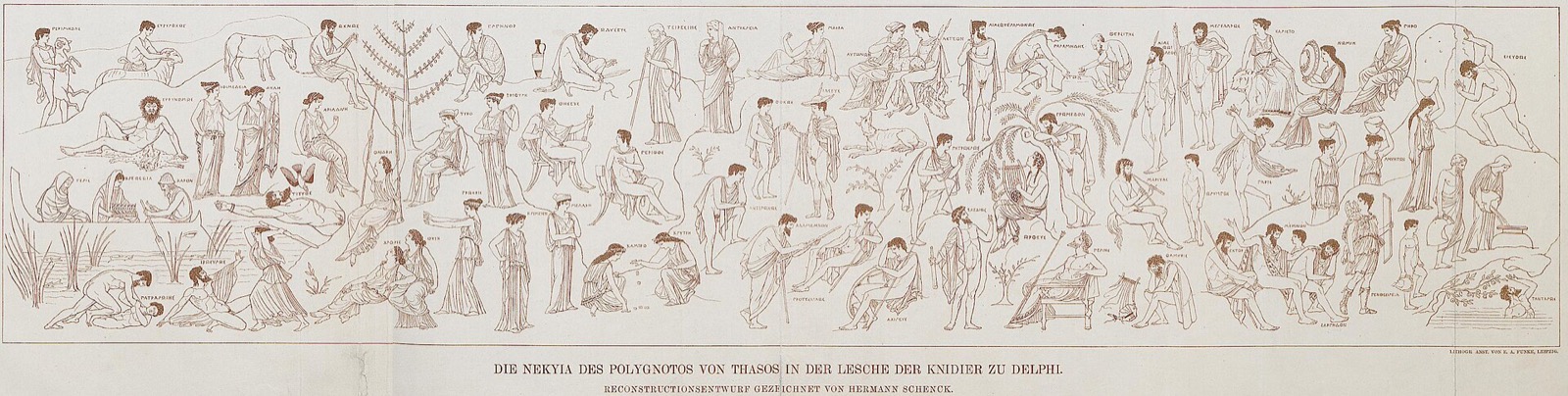
Polygnotus’ Nekyia (Lesche of the Cnidians, Delphi, c. 450s BCE; lost, described by Pausanias 10.28–31) · reconstruction by Carl Robert & Hermann Schenck, 1892 · Wikimedia
ι΄ Tale as allegory
Tale as Allegory and the New Age
Can we read all of the Odyssey’s mystical elements allegorically instead of literally?
Aristotle: “the lover of myth (φιλόμυθος) is in a way a lover of wisdom, for myth is composed of wonders (θαυμάσια)” literal tr.,Metaph. 982b18–19 → Polyphemus is a θαῦμα (9.190)
cf the Bible: bifurcation of metaphysics (for the few) and folktales for entertainment (for the many)
see Nietzsche on chanting → GS §84 (rhythm, prayer, incantation) + §128 (the value of prayer) ↓
Humanities as interpretive / inferent compression
Polyphemus: monstrous but never explicitly inhuman in features
Hubris was his downfall: ἀθεμίστια ᾔδη, no ξενία. cf Bakker
Monstrum as normative?cf Foucault, Abnormal
fact-check: the monster lectures are 3–4 (22 & 29 Jan 1975); 5 (5 Feb) is the hinge “from the monster to the abnormal”; 6 (12 Feb) is on instinct, not monsters
ἀθεμίστια ᾔδη
“he knew lawless ways” · Od. 9.189
Head of Polyphemus, Hellenistic marble, MFA Boston 63.120 · Mark Landon, CC BY 4.0 · Wikimedia
the sculptor gives him one eye; Homer never describes it
I Prayer, chant, aesthetics
“Prayer has been devised for such men as have never any thoughts of their own, and to whom an elevation of the soul is unknown … They may then, like the Tibetans, chew the cud of their ‘om mane padme hum,’ innumerable times … their mode of prayer is devised for the advantage of the pious who have thought and elevation of their own … in every religion the religious man is an exception … All that religion wants with such persons is that they should keep still with their eyes, hands, legs, and all their organs: they thereby become temporarily beautified and—more human-looking!”
There a monstrous man was wont to sleep, who shepherded his flocks alone and afar, and mingled not with others, but lived apart, with his heart set on lawlessness. For he was fashioned a wondrous monster, and was not like a man that lives by bread, but like a wooded peak of lofty mountains, which stands out to view alone, apart from the rest.
ἀλλά μοι εἴφʼ ὅπῃ ἔσχες ἰὼν ἐυεργέα νῆα, ἤ που ἐπʼ ἐσχατιῆς, ἦ καὶ σχεδόν … ὣς φάτο πειράζων
“But tell me where thou didst moor thy well-wrought ship on thy coming. Was it haply at a remote part of the land, or close by?” So he spoke, tempting me
“The frame of reference of the human monster is, of course, law.”
“The monster is the limit, both the point at which law is overturned and the exception that is found only in extreme cases. The monster combines the impossible and the forbidden.”
Foucault, Abnormal, lecture of 22 Jan 1975 · tr. G. Burchell (Verso 2003), pp. 55–56
“… the monster is the major model of every little deviation. It is the principle of intelligibility of all the forms that circulate as the small change of abnormality.”
“Paradoxically, the monster is a principle of intelligibility in spite of its limit position as both the impossible and the forbidden.”
“… the abnormal individual is essentially an everyday monster, a monster that has become commonplace. For a long time the abnormal individual will be something like a pale monster.”
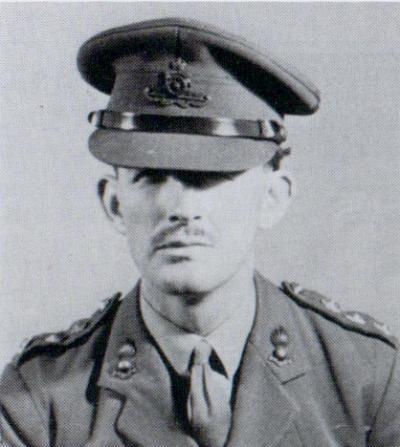
fact-check: March-Phillipps was not SAS: he founded the Small Scale Raiding Force (No. 62 Commando, under SOE), one of the SAS’s forerunners
Lesson: 1) we live in a world of men, 2) monopoly of violence. Politics is deferral from violence, cf Girard / Gans originary scene
Weber, “Politics as a Vocation” (lecture, Munich, 28 Jan 1919): the state = the community that “(successfully) claims the monopoly of the legitimate use of physical force within a given territory” tr. Gerth & Mills
Girard: we desire what our model desires → rivalry → crisis → all against one, the scapegoat; ritual re-stages that murder to keep the peace
Gans, originary scene: hominids round one object, each grab aborted → the aborted gesture becomes the first sign; language = violence deferred through representation
Odysseus has to be wily, charming, blend in when hiding in Ithaca (Athena makes him an old beggar, 13.429ff) but stand out when “fundraising” in Phaeacia, like Bond
12 kings × (cloak + tunic + talent of gold), 8.390–393; then a tripod + cauldron each, 13.13–14; Poseidon: “more than he would ever have won from Troy” πόλλ’, ὅσ’ ἂν οὐδέ ποτε Τροίης ἐξήρατ’ Ὀδυσσεύς13.137
Deeply imperfect men: serial womanizer (Calypso 5.227, Circe 10.347), hubristic (shouts his own name at the Cyclops, 9.502–505), alluringly cruel (the maids hanged “like thrushes”, 22.465–473)
See Nausicaa scene in Book 6, cf Bond walks into hotel unkempt ↓
with his stout hand he broke from the thick wood a leafy branch, that he might hold it about him and hide therewith his nakedness. … But terrible did he seem to them, all befouled with brine
the maids scatter; only Nausicaa stands, Athena puts courage in her (6.138–140). He weighs clasping her knees vs. speaking from a distance → picks the “gentle and crafty word”, μειλίχιον καὶ κερδαλέον … μῦθον (6.148)
I beseech thee, O queen, a goddess art thou, or art thou mortal? … But he again is blessed in heart above all others, who shall prevail with his gifts of wooing and lead thee to his home.
Od. 6.149, 158–159 · tr. Murray · then Artemis (6.151), the Delos palm shoot (6.162–163)
Before he seemed to me uncouth, but now he is like the gods … Would that a man such as he might be called my husband, dwelling here, and that it might please him here to remain.
… wouldst have my daughter to wife, and be called my son, and abide here; a house and possessions would I give thee
Od. 7.313–314 · Alcinous, the next evening · tr. Murray
James Bond as real characters
Fleming: Bond “was a compound of all the secret agents and commando types I met during the war” · source · the name he took from the ornithologist James Bond, Birds of the West Indies, a book Brosnan’s Bond picks up later in this same film
Maj. Gus March-Phillipps, DSO (1908–1942) · British Army photo, public domain · Wikimedia
holdsIan Fleming himself: WW2 assistant to the Director of Naval Intelligence, Adm. John Godfrey; in Mar 1942 proposed the commando unit that became 30 Assault Unit, sent in with forward troops “to capture documents, cyphers”. Bond’s smokes, golf, gambling, scrambled eggs = Fleming’s
arguedGus March-Phillipps: Jan 1942, Operation Postmaster: while the ships’ officers were at a dinner party laid on by an SOE agent, his men cut out the Italian liner Duchessa d’Aosta + German tug Likomba from neutral Spanish Santa Isabel, Fernando Pó (Bioko); 30 min, no losses. Killed 12 Sept 1942, Op. Aquatint, Normandy, shot swimming ashore
Bond link = Brian Lett, Ian Fleming and SOE’s Operation Postmaster (2012): Fleming in NID knew the operation; Fleming never named him. Henry Cavill plays him in The Ministry of Ungentlemanly Warfare (2024)
holdsPatrick Dalzel-Job (1913–2003): 30AU officer under Fleming; said Fleming told him he was the basis for Bond, adding “I have never read a Bond book or seen a Bond movie”
claimedDuško Popov (1912–1981): Serbian double agent for MI5; met Fleming in Lisbon/Estoril, the casino link to Casino Royale; but the colour comes from his own memoir Spy/Counterspy (1974), “fundamentally accurate, if occasionally embellished” (Russell Miller)
speculativeWilfred “Biffy” Dunderdale, MI6 head in Paris from 1937, Enigma liaison with the Poles · Conrad O’Brien-ffrench, skier-spy who knew the Flemings at Kitzbühel · Fitzroy Maclean, Eastern Approaches, Churchill’s man with Tito: all “suggested” / “may have”, no Fleming statement
Ian Fleming (1908–1964), c. 1958 · photo Erich Hartmann, US dust-jacket, public domain · Wikimedia
ιβ΄ Reception & Adaptations
Reception & Adaptations
Adaptations should capture the spirit of the Odyssey → needs consistency in
Zeus, and you other immortals, grant that this boy, who is my son, / may be as I am, pre-eminent among the Trojans, / great in strength, as am I, and rule strongly over Ilion; / and some day let them say of him: ‘He is better by far than his father’, / as he comes in from the fighting; and let him kill his enemy / and bring home the blooded spoils, and delight the heart of his mother.
Il. 6.476–481 · Hector prays over Astyanax · tr. Lattimore
vs
Turne, per has ego te lacrimas, per si quis Amatae tangit honos animum: spes tu nunc una, senectae tu requies miserae, decus imperiumque Latini te penes, in te omnis domus inclinata recumbit. unum oro: desiste manum committere Teucris. … simul haec invisa relinquam lumina nec generum Aenean captiva videbo.
Turnus, by these tears, by any regard for Amata that touches your heart: you are now my one hope, the rest of my wretched old age; Latinus' honour and rule lie with you, on you the whole house leans. One thing I beg: stop joining battle with the Trojans. … With you I will leave this hateful light, and not live, a captive, to see Aeneas my son-in-law.
‘equidem merui nec deprecor’ … Dauni miserere senectae … tua est Lavinia coniunx, / ulterius ne tende odiis.
“I deserved it, I don't beg off … pity Daunus' old age … Lavinia is your wife: stretch your hatred no further.”
931–938 cf Hector's plea for his body, Il. 22.338–343
pause
stetit acer in armis / Aeneas volvens oculos dextramque repressit
Aeneas stood fierce in arms, eyes rolling, and held back his right hand
938–939
the belt
infelix umero cum apparuit alto / balteus … Pallantis pueri
when on the high shoulder the ill-starred belt appeared … of the boy Pallas
941–943
kill
furiis accensus et ira / terribilis: ‘… Pallas te hoc vulnere, Pallas / immolat et poenam scelerato ex sanguine sumit.’ … vitaque cum gemitu fugit indignata sub umbras.
set ablaze by fury, terrible in wrath: “… Pallas, Pallas sacrifices you with this wound, and takes the penalty from your criminal blood.” … and life, with a groan, flees resentful to the shades below.